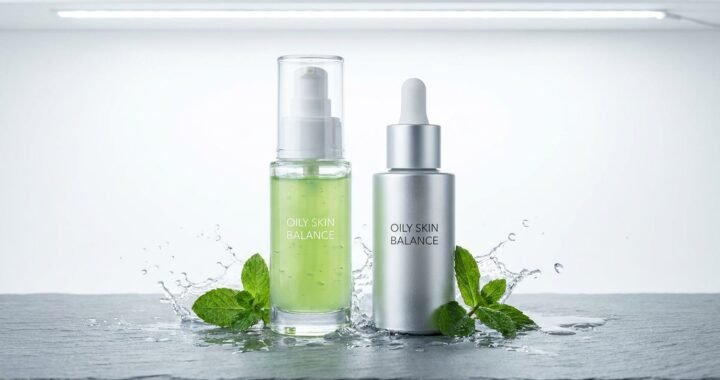
Your morning skin care routine sets the tone for your entire day it primes your skin, delivers antioxidant protection, and creates the perfect canvas for makeup or a confident bare face. The right AM skincare routine doesn’t need to be long or complicated, but it does need to follow the correct morning skincare steps in the right order to maximize effectiveness and protect your skin from daily environmental aggressors like UV rays, pollution, and blue light. In this guide, we’ll build you the perfect morning routine from cleanse to sunscreen, explain why each step matters, and help you customize it for your skin type.
Why Your Morning Skincare Routine Is Different From Your Evening One
Morning and evening routines serve completely different purposes, and understanding this distinction will transform the way you approach skincare. Your AM skincare routine is fundamentally protective it shields your skin from UV radiation, environmental pollution, oxidative stress, and free radical damage throughout the day. Your evening routine, by contrast, is restorative it cleanses away the day’s buildup and uses active ingredients to repair and renew while you sleep. This means your morning routine should feature antioxidants (like Vitamin C), lightweight hydration, and always without exception a broad-spectrum SPF. Heavy actives like retinol or exfoliating acids belong at night, not in the morning.
Step 1 — Gentle Morning Cleanser
Start your morning skincare steps with a gentle cleanse to remove sweat, overnight skincare residue, and any impurities that accumulated while you slept. In the morning, you don’t need a heavy-duty cleanser in fact, over-cleansing in the AM can strip your skin’s natural oils and compromise the barrier before the day even starts. For dry and sensitive skin, a creamy milk cleanser or even just a splash of cool water is sufficient. For oily or combination skin, a gentle gel or foam cleanser will remove excess sebum without over-stripping. Keep your morning cleanse short 30 seconds of gentle massage, then rinse thoroughly with lukewarm water.
💡 Pro Tip: If your skin feels clean when you wake up and you used a gentle overnight routine, a simple cool-water rinse is enough for your morning cleanse reserve your full cleanser for evenings when your skin actually needs it.
Step 2 — Hydrating Toner or Essence
After cleansing, apply a hydrating toner or essence to rebalance your skin’s pH and deliver the first wave of hydration. In the morning, stick to hydrating and soothing toners save exfoliating toners with AHAs or BHAs for your nighttime routine. Look for formulas featuring hyaluronic acid, glycerin, centella asiatica, niacinamide, or rose water. These ingredients prep the skin to absorb your serum and moisturizer more effectively, creating a plump, smooth base. Press the toner gently into your skin with clean palms rather than wiping it with a cotton pad this technique minimizes waste and improves absorption significantly.
💡 Pro Tip: Korean glass skin enthusiasts layer their essence three to seven times (the ‘7-skin method’) for an intensely hydrated, bouncy complexion. Try it on days when your skin feels particularly dehydrated or dull.
Step 3 — Vitamin C Serum: The Morning Superstar
A Vitamin C serum is the single most important treatment step in your morning routine and one of the most scientifically validated skincare ingredients available. Applied in the morning, Vitamin C (L-ascorbic acid) neutralizes free radicals generated by UV exposure, brightens existing hyperpigmentation, boosts collagen synthesis, and dramatically enhances the effectiveness of your sunscreen. Look for a stable Vitamin C formula at a concentration of 10–20% anything lower may not be effective, and anything higher increases irritation risk. Apply 3–4 drops to your face and neck, press gently into skin, and let absorb for 60 seconds before the next step. Store your Vitamin C serum in a dark, cool place to preserve its potency.
💡 Pro Tip: If you’re new to Vitamin C, start with a 10% formula and gradually work up to 15–20%. Some people experience mild tingling at first this is normal. If you experience redness or burning, lower the concentration or switch to a gentler derivative like ascorbyl glucoside.
Step 4 — Eye Cream: Brighten and De-Puff
Morning is the ideal time to apply an eye cream focused on brightening and de-puffing addressing the two most common morning concerns around the eyes. Look for eye creams with caffeine to constrict blood vessels and reduce puffiness, Vitamin K or niacinamide to lighten dark circles, and peptides or hyaluronic acid to smooth fine lines. Apply a tiny amount (half a grain of rice per eye) using your ring finger with light tapping motions around the entire orbital bone. Never pull or drag the delicate eye area. Apply after your serum and before moisturizer for maximum contact with the skin.
💡 Pro Tip: Keep a roller or gua sha tool in your fridge and use it over your eye area for 60 seconds after applying eye cream the combination of cold temperature and gentle drainage technique visibly reduces morning puffiness in minutes.
Step 5 — Lightweight Morning Moisturizer
Your morning moisturizer should be lightweight, fast-absorbing, and compatible with sunscreen. Heavy creams or oils in the morning can pill under SPF and makeup, creating an uneven, greasy finish. For oily skin, a water-based gel moisturizer with hyaluronic acid is ideal it hydrates without adding weight or shine. For dry skin, a lightweight lotion with ceramides and glycerin provides adequate moisture without heaviness. For combination skin, a fluid emulsion that hydrates dry areas without overloading the T-zone works beautifully. Apply while your skin is slightly damp from serum for enhanced absorption, using gentle upward and outward strokes.
💡 Pro Tip: In humid summer months, you may be able to skip a separate moisturizer entirely if your skin isn’t dry some people find that a hydrating toner plus a moisturizing sunscreen provides all the hydration they need.
Step 6 — Sunscreen: Never Optional in Your Morning Skincare Steps
The sunscreen routine is the absolute non-negotiable final step of every AM skincare routine no exceptions, no substitutions, no skipping on cloudy or indoor days. UV rays are the primary cause of premature aging, pigmentation, and skin cancer, and they penetrate clouds, glass, and windows with ease. Apply a broad-spectrum SPF 30 or higher as the very last step of your morning routine, after moisturizer has absorbed. Use at least ¼ teaspoon for your face alone. Modern sunscreen formulas have evolved dramatically today’s options include invisible mineral tints, dewy glass-skin SPFs, velvety primers, and ultra-light fluid textures that disappear into the skin beautifully.
💡 Pro Tip: Set a timer on your phone to reapply sunscreen every 2 hours if you’re spending time outdoors. SPF wears off and reapplication is just as important as the initial application. Use SPF setting sprays or powder SPF for easy touch-ups over makeup.
Morning Skincare Routine by Skin Type
Your ideal AM skincare routine should be tailored to your specific skin type. For oily skin: gel cleanser → balancing toner → niacinamide serum → oil-free gel moisturizer → matte SPF. For dry skin: cream cleanser → hydrating toner → Vitamin C serum → hyaluronic acid serum → rich moisturizer → hydrating SPF. For combination skin: gel cleanser → balancing toner → Vitamin C serum → lightweight lotion → fluid SPF. For sensitive skin: gentle cream cleanser → calming toner → niacinamide or centella serum → barrier cream → mineral SPF. The key is choosing products that address your specific concerns without overloading your skin a 4 to 5 step morning routine is ideal for most people.
Morning Skincare Tips and Best Practices
Building a consistent, effective morning skin care routine is about more than just the products you use. Here are the key habits that make the biggest difference:
- Do your routine at the same time every day: Consistency trains your skin and makes the habit stick tie your routine to something you already do, like brushing your teeth.
- Use lukewarm water only: Hot water strips natural oils and causes redness; cold water doesn’t effectively rinse cleanser. Lukewarm is the perfect temperature for morning cleansing.
- Pat dry, never rub: After rinsing, pat your skin gently with a clean, soft towel. Rubbing creates friction that irritates skin and can cause broken capillaries over time.
- Apply SPF to your neck and hands: These areas age just as fast as your face and are often neglected in sunscreen application. Extend your SPF coverage every single morning.
- Wait 15–20 minutes after SPF before applying makeup: This allows sunscreen to bind and form a protective film on the skin, ensuring maximum efficacy before you layer cosmetics.
- Stay consistent for at least 8 weeks: Skincare results are cumulative. Most active ingredients take 6–8 weeks of daily use to show visible improvements, so don’t abandon a routine too soon.
- Keep it simple when life is busy: On rushed mornings, a 3-step routine (gentle cleanse + moisturizer + SPF) is infinitely better than skipping skincare altogether. Simple and consistent beats complex and sporadic every time.
Final Thoughts on Your Morning Skin Care Routine
A well-crafted morning skin care routine is one of the most powerful investments you can make in your long-term health and confidence. The right AM skincare routine built around antioxidants, hydration, and daily sun protection prevents years of aging, protects against environmental damage, and gives you a radiant complexion that lasts. Whether your morning skincare steps take three minutes or fifteen, what matters most is that you do them every single day, in the right order, with products suited to your skin. Start where you are, use what you have, and build from there your skin will thank you for it.