If you’ve been scrolling salon inspiration lately, you’ve probably noticed a pattern: hair looks glossier, warmer, and more “put-together-but-not-trying-too-hard” than in years past. That’s the heart of hair color trends 2026 less about chasing one single “it” color and more about richness, dimension, and shades that feel personal rather than copy-pasted. Whether you’re a lifelong brunette curious about a warmer reflect, a blonde craving something creamier, or someone easing into gray with confidence, this year’s direction has room for you.
In this guide, you’ll find a breakdown of the biggest 2026 color movements, more than a dozen specific shades to bring to your stylist, and practical advice on choosing colors by skin tone, natural base, and how much upkeep you actually want to commit to.
Quick answer: According to early-2026 professional forecasts, the defining hair color trends for the year lean warm, dimensional, and glossy think rich brunettes with golden or copper undertones, wearable blondes with soft roots, a strong return of red and copper shades, and more natural, blended approaches to gray. Low-maintenance techniques like root smudging and lived-in balayage remain popular alongside a handful of bolder, more expressive statement colors.
What Hair Color Trends Are Defining 2026?
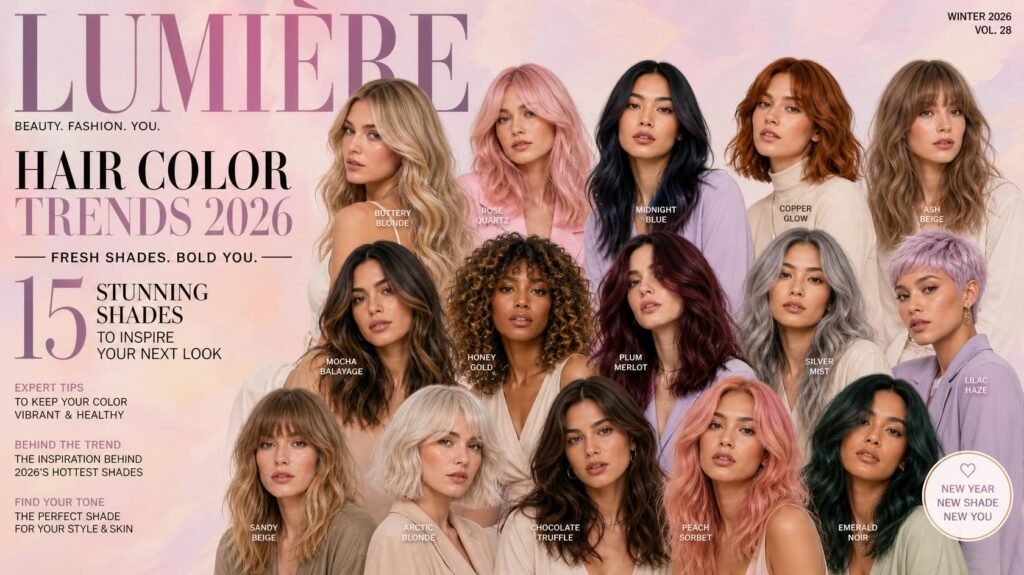
A few clear themes keep surfacing across professional forecasts and colorist commentary heading into 2026:
- Warm, rich tones. Cooler, ashier palettes are taking a back seat to honey, caramel, copper, and chestnut undertones.
- Glossy, healthy-looking finishes. Color is increasingly treated as inseparable from hair health — a shiny, reflective finish is part of the trend itself, not just an add-on.
- Dimensional color over flat, one-tone color. Multi-tonal techniques that mimic how hair naturally lightens are replacing single-process, all-over color.
- Softer, lived-in roots. Root smudging and strategic shadow roots are used to stretch time between salon visits.
- More personalized shades. Colorists are increasingly customizing formulas around a client’s skin tone and eye color rather than requesting a “trend” wholesale.
- Natural-looking color mixed with bold accents. Many people are pairing an overall natural-looking base with small, expressive pops of color.
- Low-maintenance techniques taking priority. Balayage-style placement and tonal glosses continue to dominate because they grow out gracefully.
- A nostalgic pull toward the 1990s and early 2000s. High-shine, higher-contrast color with visible dimension is having a moment, echoing that era’s glossy, statement-making finishes.
- Creative shades adapted into wearable versions. Bold colors like teal, lavender, and berry are increasingly offered as subtle placements — think ends, panels, or peekaboo streaks — rather than full head applications.
It’s worth noting that hair color forecasting isn’t an exact science. Different colorists and publications emphasize slightly different shades each season, so think of the list below as a curated set of directions worth exploring rather than a rulebook.
The Biggest Hair Color Trends for 2026
Double-Shot Brunette
This shade layers two depths of brown — a slightly deeper base with a lighter, espresso-adjacent mid-tone — to create subtle depth without high-contrast highlights. It’s popular in 2026 because it reads as rich and intentional while still looking completely natural at a glance.
- Who it suits: Brunettes who want dimension without commitment to visible highlights.
- Best skin undertones: Warm and neutral undertones.
- Best base hair colors: Medium to dark brown.
- Maintenance level: Low to medium.
- Salon refresh: Roughly every 10–14 weeks.
- Say this to your stylist: “I want subtle depth in my brunette without any obvious highlights.”
- Maintenance tip: A brunette-specific gloss every 6–8 weeks keeps the tonal shift looking fresh between full appointments.
Candlelit Brunette
Warm, honeyed, and soft, this trend uses fine, low-contrast highlights placed to catch the light — as if lit from within. It has gained traction because it flatters a wide range of warm and neutral skin tones without looking overly processed.
- Who it suits: Brunettes wanting warmth and glow rather than drama.
- Best skin undertones: Warm and golden undertones.
- Best base hair colors: Medium brown to dark blonde.
- Maintenance level: Medium.
- Salon refresh: Every 10–12 weeks, with optional gloss touch-ups in between.
- Say this to your stylist: “I want fine, warm highlights that look like natural light hitting my hair.”
- Maintenance tip: Use a color-safe leave-in oil to enhance shine and prevent the warm tones from looking dull.
Glossy Espresso Brunette
An intensely rich, near-black brown with a reflective, almost lacquered finish. What sets it apart from a standard dark brunette is the emphasis on shine — the color is deliberately kept simple so all the visual interest comes from the gloss itself.
- Who it suits: Brunettes and those transitioning to darker hair who want a polished, editorial look.
- Best skin undertones: Cool and neutral undertones tend to make this shade pop, though it can be adapted for warm undertones with a softer brown base.
- Best base hair colors: Dark brown to black.
- Maintenance level: Low, aside from gloss refreshes.
- Salon refresh: A gloss every 6–8 weeks maintains shine; full color touch-ups are needed less often.
- Say this to your stylist: “I want a deep, glassy brunette with maximum shine and minimal warmth.”
- Maintenance tip: Cooler water temperatures during washing help seal the cuticle and preserve shine.
Rich Chocolate Brown
A classic, warm, medium-to-dark brown that leans slightly red or golden rather than flat or ashy. It’s a dependable, wearable option that continues to trend because it photographs beautifully and suits nearly every warm-leaning complexion.
- Who it suits: Brunettes wanting a timeless, universally flattering shade.
- Best skin undertones: Warm and neutral.
- Best base hair colors: Any natural or previously colored brown.
- Maintenance level: Low.
- Salon refresh: Every 6–8 weeks for root coverage if gray is present; otherwise as needed.
- Say this to your stylist: “I want a warm chocolate brown, not ashy or cool-toned.”
- Maintenance tip: A weekly deep conditioner helps chocolate brown stay glossy rather than looking matte.
Mocha Brunette
Somewhere between chocolate and caramel, mocha brunette blends a soft brown base with subtle golden-beige dimension. It reads as effortless and works especially well as a “grow-out friendly” color.
- Who it suits: Brunettes wanting warmth that’s softer than caramel but richer than plain brown.
- Best skin undertones: Neutral to warm.
- Best base hair colors: Medium brown.
- Maintenance level: Low to medium.
- Salon refresh: Every 10–12 weeks.
- Say this to your stylist: “I want a mocha tone — soft brown with subtle golden-beige dimension, nothing too bright.”
- Maintenance tip: Toning gloss treatments keep the beige undertone from fading into a flatter brown.
Blurred Brunette
This technique softens the line between highlights and base color using a diffused, hand-painted approach, so there’s no harsh demarcation as it grows out. It’s a favorite for people who want dimension but dread visible regrowth lines.
- Who it suits: Brunettes who want low-maintenance highlights.
- Best skin undertones: Works across most undertones depending on the highlight color chosen.
- Best base hair colors: Medium to dark brown.
- Maintenance level: Low.
- Salon refresh: Every 12–16 weeks.
- Say this to your stylist: “I want blurred, hand-painted highlights with no visible line as it grows out.”
- Maintenance tip: Because there’s no hard line, you can safely stretch appointments if your schedule or budget requires it.
Honey Bronde
A warm, golden hybrid between brunette and blonde, honey bronde is built from a brown base lifted with golden-honey highlights throughout. It’s a forecasted favorite for 2026 because it offers blonde’s brightness with brunette’s low-maintenance grow-out.
- Who it suits: Brunettes wanting to test blonde without fully committing.
- Best skin undertones: Warm and golden undertones.
- Best base hair colors: Medium to dark brown.
- Maintenance level: Medium.
- Salon refresh: Every 8–10 weeks.
- Say this to your stylist: “I want honey-toned highlights over my brunette base — warm, not brassy.”
- Maintenance tip: A color-depositing honey or gold toning mask between appointments keeps brassiness at bay.
Cherry Cola Brunette
A deep brown infused with red-violet undertones that shift subtly in different lighting — appearing brown indoors and revealing a rich cherry glow in the sun. This shade has become a signature “wearable red” for brunettes who don’t want a full color change.
- Who it suits: Brunettes wanting a hint of red without going fully auburn.
- Best skin undertones: Cool and neutral undertones tend to make the red-violet shift more visible.
- Best base hair colors: Dark brown.
- Maintenance level: Medium, since red-based tones fade faster than pure brown.
- Salon refresh: Every 6–8 weeks, with a gloss in between to refresh the red tone.
- Say this to your stylist: “I want a cherry cola brunette — brown with a red-violet undercurrent that shows in the sun.”
- Maintenance tip: Color-safe, sulfate-free shampoo slows red fade significantly.
Golden or Copper-Toned Brunette
This trend adds warm copper or gold reflects throughout an otherwise natural brunette base, giving the hair a sun-kissed glow without the maintenance of a full copper transformation.
- Who it suits: Brunettes wanting warmth and radiance.
- Best skin undertones: Warm undertones especially, though neutral undertones can wear a softer version.
- Best base hair colors: Medium to dark brown.
- Maintenance level: Medium.
- Salon refresh: Every 8–10 weeks.
- Say this to your stylist: “I want warm copper-gold reflects mixed into my brunette, not a full copper color.”
- Maintenance tip: UV-protectant hair products help copper reflects resist fading in sunlight.
Liquid Noir
An ultra-glossy, almost blue-black shade designed to look wet, reflective, and high-shine — a dramatic option that leans into the 1990s-inspired revival of high-contrast, statement color.
- Who it suits: Those wanting a striking, dramatic dark shade.
- Best skin undertones: Cool undertones tend to complement the blue-black base most naturally.
- Best base hair colors: Dark brown to black.
- Maintenance level: Low to medium, but achieving true “liquid” shine may require professional gloss treatments.
- Salon refresh: A gloss refresh every 6–8 weeks maintains the mirror-like finish.
- Say this to your stylist: “I want an ultra-glossy, near-black shade with a subtle blue undertone.”
- Maintenance tip: Avoid excessive heat styling, which can dull the reflective finish.
Buttery Blonde
A creamy, warm blonde with soft golden undertones — less icy than platinum, less brassy than gold. It’s forecasted as one of 2026’s most requested blondes because it’s flattering, wearable, and grows out gently.
- Who it suits: Blondes wanting warmth without going full honey or caramel.
- Best skin undertones: Warm and neutral undertones.
- Best base hair colors: Light to medium blonde or light brown.
- Maintenance level: Medium.
- Salon refresh: Every 8–10 weeks.
- Say this to your stylist: “I want a creamy, buttery blonde — warm, not icy or brassy.”
- Maintenance tip: A color-depositing purple-gold shampoo (rather than pure purple) helps maintain the buttery tone without over-cooling it.
Ethereal Blonde
A pale, luminous blonde with a soft, almost translucent quality, often achieved through careful balayage and toning. Some forecasts describe increasingly dramatic, high-shine platinum tones as part of this direction, though such a dramatic lift is a significant chemical process best assessed in person.
- Who it suits: Blondes wanting a soft, light-catching finish.
- Best skin undertones: Cool and neutral undertones generally complement this shade best.
- Best base hair colors: Light blonde or previously lightened hair.
- Maintenance level: High.
- Salon refresh: Toning every 4–6 weeks to prevent brassiness.
- Say this to your stylist: “I want a soft, luminous, pale blonde — not stark white, more ethereal.”
- Maintenance tip: Bond-building treatments are strongly recommended if lightening from a darker base.
Warm Lived-In Blonde
This is the low-maintenance blonde of the moment: a soft, graduated color with a deliberately soft-grown root, designed to look natural even months after a salon visit.
- Who it suits: Blondes who want low upkeep.
- Best skin undertones: Works across most undertones depending on the exact gold-to-beige ratio used.
- Best base hair colors: Light to medium blonde or light brown.
- Maintenance level: Low.
- Salon refresh: Every 12–16 weeks.
- Say this to your stylist: “I want a lived-in blonde with a soft root that grows out naturally.”
- Maintenance tip: Regular gloss treatments extend the life of the blonde between full appointments.
Creamy Espresso Blonde
A dimensional blonde built over a deep espresso base, with soft, blended highlights rather than an all-over lightening. The dark root and creamy blonde lengths create a rich, high-contrast-but-wearable effect.
- Who it suits: Brunettes transitioning toward blonde, or blondes wanting more depth.
- Best skin undertones: Neutral to cool undertones.
- Best base hair colors: Dark brown.
- Maintenance level: Medium to high.
- Salon refresh: Every 8–10 weeks.
- Say this to your stylist: “I want a dark espresso root with creamy blonde through the lengths.”
- Maintenance tip: Bond-support treatments help offset the lightening required to lift a dark base.
Golden Beige Blonde
A balanced, neutral-warm blonde that avoids both overly gold and overly ashy extremes. It’s a versatile, office-friendly shade that’s popular precisely because it’s easy to wear daily.
- Who it suits: Blondes wanting a natural, everyday shade.
- Best skin undertones: Neutral undertones especially.
- Best base hair colors: Light to medium blonde.
- Maintenance level: Medium.
- Salon refresh: Every 8–10 weeks.
- Say this to your stylist: “I want a balanced golden-beige blonde — not too warm, not too ashy.”
- Maintenance tip: Alternate between purple and gold-toning shampoos to keep the balance intact.
Peach Blonde
A blush-adjacent, warm rose-gold blonde with soft peachy undertones. It’s one of the more expressive 2026 blonde forecasts, offering a subtle statement without a full fashion-color commitment.
- Who it suits: Blondes wanting a playful but wearable twist.
- Best skin undertones: Warm and neutral undertones.
- Best base hair colors: Light blonde.
- Maintenance level: Medium to high, since pastel-adjacent tones fade faster.
- Salon refresh: Toning every 4–6 weeks.
- Say this to your stylist: “I want a soft peach-blonde tone — subtle, not full pastel.”
- Maintenance tip: Color-depositing conditioners in peach or rose tones help maintain the hue between salon visits.
Powdered or Muted Blonde
A soft, matte blonde with a gently smoky finish — less shiny-gold, more diffused and cool-neutral. It’s a quieter alternative to high-shine blonde trends, appealing to those who prefer an understated look.
- Who it suits: Blondes wanting a soft, muted finish.
- Best skin undertones: Cool and neutral undertones.
- Best base hair colors: Light to medium blonde.
- Maintenance level: Medium.
- Salon refresh: Every 8–10 weeks.
- Say this to your stylist: “I want a muted, powdery blonde — soft and matte, not shiny-gold.”
- Maintenance tip: Avoid heavy shine serums, which can counteract the intentionally matte finish.
Expensive Blonde
A multidimensional blend of several coordinating blonde tones, designed to mimic the sun-lightened look often associated with high-end salon color. The name reflects the technique’s labor-intensive, highly customized application rather than any specific hue.
- Who it suits: Blondes wanting maximum dimension.
- Best skin undertones: Adaptable depending on tone selection.
- Best base hair colors: Light to medium blonde or light brown.
- Maintenance level: Medium.
- Salon refresh: Every 10–14 weeks.
- Say this to your stylist: “I want a multidimensional, sun-kissed blonde blend, not one flat tone.”
- Maintenance tip: Because it uses several coordinating shades, this color tends to grow out more gracefully than single-process blonde.
Dimensional Blonde with Darker Roots
A deliberately grown-out-looking blonde with a soft shadow root blended into brighter lengths. This remains one of the most requested low-maintenance blonde options because it looks intentional at every stage of regrowth.
- Who it suits: Blondes wanting brightness with minimal root maintenance.
- Best skin undertones: Works across most undertones.
- Best base hair colors: Any base, since the root shadow can be customized.
- Maintenance level: Low.
- Salon refresh: Every 12–16 weeks.
- Say this to your stylist: “I want a soft shadow root that blends naturally into brighter blonde lengths.”
- Maintenance tip: A root-blurring spray can extend the seamless look between appointments.
Saffron Red
A warm, golden-orange-red shade named for its spice-inspired hue. It’s a bold but wearable red that reads as vibrant without veering into unnatural territory.
- Who it suits: Those wanting a bright but believable red.
- Best skin undertones: Warm undertones.
- Best base hair colors: Medium blonde to light brown.
- Maintenance level: High, as vivid reds fade fastest of all color families.
- Salon refresh: Gloss refresh every 4–6 weeks.
- Say this to your stylist: “I want a warm, golden-orange red — vivid but still natural-looking.”
- Maintenance tip: Wash less frequently and use cool water to slow red fade.
Amber Red
A warm, honeyed red-brown with a glowing, translucent quality reminiscent of amber stone. It bridges red and brunette categories, making it approachable for those hesitant to go fully red.
- Who it suits: Brunettes and blondes wanting to try red gradually.
- Best skin undertones: Warm undertones.
- Best base hair colors: Medium brown to dark blonde.
- Maintenance level: Medium.
- Salon refresh: Every 8–10 weeks.
- Say this to your stylist: “I want an amber-red tone — warm and glowing, not bright orange.”
- Maintenance tip: Color-safe conditioning masks with warm pigment help maintain depth.
Golden Copper
A bright, sunny copper with strong golden undertones, sitting between red and orange on the color wheel. It’s one of the more attention-getting 2026 shades, forecast to be especially popular heading into the warmer months.
- Who it suits: Those wanting a statement color that still reads as natural-adjacent.
- Best skin undertones: Warm undertones.
- Best base hair colors: Light to medium blonde or light brown.
- Maintenance level: High.
- Salon refresh: Toning every 4–6 weeks.
- Say this to your stylist: “I want a bright, golden copper — not muted, but not neon either.”
- Maintenance tip: Copper fades to gold first, so a color-depositing copper mask helps maintain the original tone longer.
Burnt Copper
A deeper, more muted copper with brown undertones — the fall-leaning counterpart to golden copper. It’s a favorite as the seasons shift because it feels warm and moody rather than bright.
- Who it suits: Redheads and brunettes wanting a cozy, autumnal red.
- Best skin undertones: Warm and neutral undertones.
- Best base hair colors: Medium to dark brown.
- Maintenance level: Medium.
- Salon refresh: Every 6–8 weeks.
- Say this to your stylist: “I want a deep, burnt copper — muted and warm, more brown than orange.”
- Maintenance tip: Deep conditioning weekly helps prevent the copper from turning brassy as it fades.
Cinnamon Auburn
A warm reddish-brown named for its spice-toned depth, sitting between chestnut and copper. Forecasters point to this as one of the defining shades of the cooler months, prized for its cozy, wearable warmth.
- Who it suits: Brunettes wanting red warmth without a dramatic shift.
- Best skin undertones: Warm undertones.
- Best base hair colors: Medium to dark brown.
- Maintenance level: Medium.
- Salon refresh: Every 6–8 weeks.
- Say this to your stylist: “I want a cinnamon auburn — reddish-brown, warm and spicy, not overly bright.”
- Maintenance tip: A weekly color-refreshing conditioner keeps the auburn tone from fading into plain brown.
Cherry Red
A vivid, cool-toned red with blue-red undertones, distinct from warmer copper or auburn shades. It’s a bolder pick that typically requires pre-lightening for full vibrancy.
- Who it suits: Those wanting a dramatic, cool-toned red.
- Best skin undertones: Cool undertones tend to make this shade especially vivid.
- Best base hair colors: Light to medium blonde ideally, though it can be layered over darker bases with less intensity.
- Maintenance level: High.
- Salon refresh: Every 4–6 weeks.
- Say this to your stylist: “I want a vivid cherry red with cool, blue-red undertones.”
- Maintenance tip: Rinse with cool water only and avoid clarifying shampoos, which strip red pigment quickly.
Cherry Cola
A rich, near-black red with deep burgundy undertones — darker and more subdued than cherry red, closer to a mysterious wine tone. It has become a signature fall and winter shade thanks to its depth and drama.
- Who it suits: Brunettes wanting drama without brightness.
- Best skin undertones: Cool and neutral undertones.
- Best base hair colors: Dark brown to black.
- Maintenance level: Medium.
- Salon refresh: Every 6–8 weeks with gloss refreshes in between.
- Say this to your stylist: “I want a cherry cola tone — deep burgundy-red with almost-black depth.”
- Maintenance tip: Sulfate-free shampoo is essential, as burgundy tones fade quickly with harsher cleansers.
Ginger Brown
A muted, brownish-red reminiscent of natural ginger hair, softer and less saturated than a full auburn. It’s a subtle way to add red warmth while staying close to a natural brunette base.
- Who it suits: Brunettes wanting a very natural-looking red hint.
- Best skin undertones: Warm undertones.
- Best base hair colors: Medium brown.
- Maintenance level: Low to medium.
- Salon refresh: Every 8–10 weeks.
- Say this to your stylist: “I want a soft ginger-brown tint — natural, not a full red transformation.”
- Maintenance tip: A tinted conditioner in a warm red-brown shade can extend color between salon visits.
Deep Auburn
A dark, rich red-brown with more red intensity than cinnamon auburn but less brightness than cherry cola. It’s a versatile, universally flattering red-brown that works well across seasons.
- Who it suits: Brunettes wanting noticeable but wearable red.
- Best skin undertones: Warm and neutral undertones.
- Best base hair colors: Medium to dark brown.
- Maintenance level: Medium.
- Salon refresh: Every 6–8 weeks.
- Say this to your stylist: “I want a deep auburn — rich red-brown with real depth.”
- Maintenance tip: Limit hot tool use, since heat accelerates red fade more than with other color families.
Graphite Gray
A cool-toned, smoky gray with silvery-charcoal depth, designed to look like intentional, styled gray rather than simply “growing it out.” This is one of the more requested gray shades among people wanting a fashion-forward take on going gray.
- Who it suits: Those with graying hair wanting a polished, intentional look, or those wanting to color toward gray.
- Best skin undertones: Cool undertones.
- Best base hair colors: Naturally graying hair, or pre-lightened hair for a full color change.
- Maintenance level: High if color-created; low to medium if working with natural gray.
- Salon refresh: Toning every 4–6 weeks to maintain the cool tone.
- Say this to your stylist: “I want an intentional, cool-toned graphite gray, not a flat silver.”
- Maintenance tip: A blue- or silver-toning shampoo helps prevent yellowing between visits.
Silver Blend
A technique that blends natural gray with silver or white highlights, softening the transition and adding brightness. It’s a popular forecasted approach for people who want to embrace their gray more confidently.
- Who it suits: Anyone with a significant amount of natural gray wanting a softer, more dimensional look.
- Best skin undertones: Cool and neutral undertones.
- Best base hair colors: Naturally graying hair.
- Maintenance level: Medium.
- Salon refresh: Every 10–12 weeks.
- Say this to your stylist: “I want silver highlights blended with my natural gray for softer contrast.”
- Maintenance tip: Regular toning keeps the silver from turning brassy or yellow.
Natural Gray Enhancement
Rather than adding artificial color, this approach uses toning and gloss treatments to enhance the natural silver or white already present, improving shine and reducing yellowing without changing the overall shade.
- Who it suits: Anyone transitioning to or already wearing natural gray who wants it to look its healthiest.
- Best skin undertones: Works across all undertones since it enhances an existing color rather than creating a new one.
- Best base hair colors: Natural gray or white hair.
- Maintenance level: Low.
- Salon refresh: A toning gloss every 8–10 weeks.
- Say this to your stylist: “I want a gloss treatment that enhances my natural gray and reduces any yellow tone.”
- Maintenance tip: Purple or blue shampoo used once or twice weekly (not daily) helps maintain brightness without over-toning.
Smoky Gray
A cooler, more muted gray-brown blend that softens harsh gray regrowth by mixing it with ashy brown lowlights. It’s often used as a transitional color for those growing out permanent color into natural gray.
- Who it suits: Anyone transitioning away from permanent color toward gray.
- Best skin undertones: Cool and neutral undertones.
- Best base hair colors: Previously colored hair with visible gray regrowth.
- Maintenance level: Medium.
- Salon refresh: Every 8–10 weeks during the transition period.
- Say this to your stylist: “I’m transitioning to gray — can we blend ashy lowlights to soften the regrowth line?”
- Maintenance tip: Patience is key; a gradual transition over several appointments tends to look more polished than a single dramatic change.
Soft Charcoal
A warmer take on gray, blending deep charcoal with subtle brown undertones for a less stark, more wearable finish. It suits people who like the idea of gray but want to avoid a cold, flat result.
- Who it suits: Those wanting gray with warmth rather than a stark cool tone.
- Best skin undertones: Neutral and warm undertones.
- Best base hair colors: Dark hair with emerging gray.
- Maintenance level: Medium.
- Salon refresh: Every 8–10 weeks.
- Say this to your stylist: “I want a soft charcoal gray with warm undertones, not stark or cool.”
- Maintenance tip: Warm-toned glosses help prevent the color from reading too flat or ashy.
Gray Blending with Lowlights
A technique that weaves strategic lowlights through natural gray to soften the contrast between gray and remaining pigmented hair, making the overall look more dimensional and less like a single flat tone.
- Who it suits: Anyone with partial gray wanting a more blended, natural transition.
- Best skin undertones: Works across most undertones.
- Best base hair colors: Partially gray hair.
- Maintenance level: Low to medium.
- Salon refresh: Every 10–14 weeks.
- Say this to your stylist: “I want lowlights woven through my gray to soften the contrast, not cover it completely.”
- Maintenance tip: This technique typically requires less frequent touch-ups than full coverage color, since gray regrowth blends more naturally.
Lavender Mist
A soft, diffused lavender tone typically applied to the ends or as subtle all-over toner rather than a saturated pastel. It’s a wearable entry point into fashion color for people who want something unexpected without full commitment.
- Who it suits: Blondes and light brunettes wanting a playful accent.
- Best skin undertones: Cool and neutral undertones.
- Best base hair colors: Light blonde works best for true pastel results.
- Maintenance level: High, as pastels fade quickly.
- Salon refresh: Every 4–6 weeks, or as needed if using semi-permanent product.
- Say this to your stylist: “I want a soft, misty lavender — subtle, not a saturated pastel.”
- Maintenance tip: Cool showers and color-safe, sulfate-free shampoo dramatically extend pastel tones.
Transformative Teal
A deep, jewel-toned teal typically placed as underlights, ends, or panels rather than an all-over color, offering a dramatic pop that can be hidden or shown depending on styling.
- Who it suits: Those wanting bold color with the option to conceal it for work or formal settings.
- Best skin undertones: Cool undertones tend to complement teal most, though placement matters more than skin tone here.
- Best base hair colors: Pre-lightened sections work best for true vibrancy.
- Maintenance level: High.
- Salon refresh: Every 3–5 weeks for vividness.
- Say this to your stylist: “I want teal placed underneath so I can hide or show it depending on my hairstyle.”
- Maintenance tip: Braiding or tying hair up before swimming or heavy sun exposure protects vivid tones from rapid fading.
Jewel-Toned Hair
An umbrella trend covering rich, saturated colors like emerald, sapphire, and amethyst, generally used as accents, money-piece panels, or full-color statements for those ready for a dramatic change.
- Who it suits: Those confident in bold, non-traditional color.
- Best skin undertones: Depends on the specific jewel tone chosen; a colorist consultation is especially useful here.
- Best base hair colors: Pre-lightened hair for full vibrancy.
- Maintenance level: High.
- Salon refresh: Every 3–5 weeks.
- Say this to your stylist: “I want a saturated jewel tone — can we test a strand first to see how it develops?”
- Maintenance tip: Color-depositing conditioners in the matching jewel tone slow fading between salon visits.
Rose Brown
A soft, dusty brown with subtle pink-mauve undertones — understated enough for everyday wear but distinct from a standard brunette. It’s forecast as a gentle bridge between natural and creative color.
- Who it suits: Brunettes wanting a hint of color without going fully fantasy.
- Best skin undertones: Cool and neutral undertones.
- Best base hair colors: Medium to light brown.
- Maintenance level: Medium.
- Salon refresh: Toning every 6–8 weeks.
- Say this to your stylist: “I want a rose brown — brown with subtle pink-mauve undertones, kept soft and wearable.”
- Maintenance tip: A tinted purple-pink conditioner between visits keeps the rose tone visible.
Berry Tones
A family of rich, fruit-inspired reds and purples — think raspberry, plum, and blackberry — generally applied as an all-over color or deep balayage for a moody, wearable statement.
- Who it suits: Those wanting a colorful but sophisticated statement shade.
- Best skin undertones: Cool undertones especially, though warmer berry shades can suit neutral undertones.
- Best base hair colors: Medium to dark brown.
- Maintenance level: Medium to high.
- Salon refresh: Every 6–8 weeks.
- Say this to your stylist: “I want a berry tone — can we look at plum, raspberry, and blackberry swatches together?”
- Maintenance tip: Cooler wash temperatures and infrequent washing help berry tones last longer.
Pastel Color Melts
A gradual, blended transition from a natural base into pastel tones at the ends, avoiding a harsh line between natural and fantasy color. It’s a popular way to experiment with pastels without a full head commitment.
- Who it suits: Anyone wanting to test pastel color gradually.
- Best skin undertones: Depends on the pastel shade chosen.
- Best base hair colors: Pre-lightened ends work best for true pastel payoff.
- Maintenance level: High for the pastel portion, though the natural roots require minimal upkeep.
- Salon refresh: Refresh the pastel ends every 4–6 weeks; roots can be left longer.
- Say this to your stylist: “I want a gradual color melt into pastel at the ends, blended so there’s no harsh line.”
- Maintenance tip: Trim the ends regularly, since pastel color is often applied to previously lightened, more porous hair.
Face-Framing Color
A technique that concentrates lighter or brighter color around the face rather than throughout the whole head, drawing attention to the face and requiring far less product and time than full-head color.
- Who it suits: Anyone wanting a brightening effect with minimal commitment.
- Best skin undertones: Adaptable, since the shade can be customized.
- Best base hair colors: Any base color.
- Maintenance level: Low to medium.
- Salon refresh: Every 10–14 weeks.
- Say this to your stylist: “I just want brightness around my face, not throughout my whole head.”
- Maintenance tip: Because it covers less hair, face-framing color is often a lower-cost way to get a noticeable brightening effect.
Color-Blocking
A technique that places distinct, separate color sections (rather than blended dimension) for a graphic, intentional look — for example, a solid panel of contrasting color beneath a natural top layer.
- Who it suits: Those wanting a bold, editorial statement rather than soft dimension.
- Best skin undertones: Depends on the color chosen.
- Best base hair colors: Works on most bases, though pre-lightening is needed for bright block colors.
- Maintenance level: High.
- Salon refresh: Every 4–6 weeks for vivid blocks.
- Say this to your stylist: “I want distinct color blocking, not blended — a clear panel of contrasting color.”
- Maintenance tip: Keep blocked sections separated during washing to avoid color bleeding onto surrounding hair.
Metallic-Inspired Shades
Cool, reflective tones like pewter, gunmetal, and rose gold that mimic metallic finishes rather than traditional pigment-based color. These require significant pre-lightening and are considered one of the more advanced, high-maintenance 2026 forecasts.
- Who it suits: Those wanting a futuristic, high-shine statement.
- Best skin undertones: Cool undertones typically complement metallic tones best.
- Best base hair colors: Pre-lightened, healthy hair.
- Maintenance level: High.
- Salon refresh: Toning every 3–4 weeks.
- Say this to your stylist: “I’m interested in a metallic tone — can we assess whether my hair can safely reach that level of lift?”
- Maintenance tip: Bond-repair treatments are essential given the lightening required to achieve true metallic tones.
Subtle Peekaboo Color
Small, concealed panels of bold color placed underneath the top layer of hair, visible only when hair is tucked behind the ears, tied up, or styled a certain way. It’s one of the most flexible bold-color options because it can be hidden entirely when needed.
- Who it suits: Anyone wanting bold color with full control over visibility.
- Best skin undertones: Depends on the chosen peekaboo color.
- Best base hair colors: Any base color, since only a small section is treated.
- Maintenance level: Medium.
- Salon refresh: Every 6–8 weeks.
- Say this to your stylist: “I want a peekaboo color underneath — something I can hide or reveal depending on my hairstyle.”
- Maintenance tip: Because only a small section is colored, at-home color-depositing products can safely refresh peekaboo panels between visits.
Best 2026 Hair Colors by Natural Hair Color
For Natural Blondes
Natural blondes are well-positioned to try buttery blonde, golden beige blonde, or a dimensional blonde with a soft shadow root — all shades that build on existing pigment rather than requiring heavy lightening. Because you’re not fighting your base color, these options tend to be lower maintenance and gentler on hair health. Regular toning every 4–8 weeks keeps warm blondes from turning brassy and cool blondes from yellowing.
For Natural Brunettes
Brunettes have the widest playground in 2026, from dimensional browns like double-shot or blurred brunette to warmer options like candlelit brunette, caramel-toned bronde, or a hint of copper. Cherry cola and cherry cola brunette offer red warmth without a dramatic base change, while glossy espresso brunette leans into rich, dark simplicity. Because brown-based color generally requires less lightening, most of these options fall into the low-to-medium maintenance range.
For Natural Redheads
If you already have red or auburn hair, 2026 trends favor enhancing rather than overhauling your natural color. Amber, ginger brown, and cinnamon auburn tones can deepen and enrich the red you already have, while a clear gloss treatment adds shine and slows fading. Because natural red pigment can be more delicate and prone to fading, gentle, sulfate-free products are especially worthwhile.
For Black Hair
Espresso brunette, blue-black, soft black with subtle warm reflects, brown-black, and cherry-black are all strong 2026-forward options for black hair. These shades add dimension and shine without requiring the significant lightening that brighter colors demand, which helps protect hair integrity. A glossing treatment every 6–8 weeks is often enough to keep black hair looking rich and reflective rather than flat.
For Gray or Silver Hair
Gray blending with lowlights, graphite gray, and natural gray enhancement are all strong 2026 directions for those with gray hair, whether you’re fully embracing it or transitioning gradually. Blending techniques soften the line between gray and pigmented hair, while toning glosses control any unwanted yellow or brassy tones. If you’re mid-transition, expect it to take several appointments over months, not one dramatic session — a gradual approach tends to look more intentional and protects hair condition.
For Previously Colored or Damaged Hair
If your hair has already been through color changes, chemical services, or heat damage, the safest path toward any of these trends is usually gradual. A colorist can assess your hair’s current condition, porosity, and how much previous color is still present before recommending a realistic timeline. Dramatic transformations — like going from black to platinum, or coloring over red-based tones — often require multiple sessions with conditioning treatments in between to protect hair integrity. Being upfront about your hair’s history helps your colorist plan a safer, more successful result.
Best Hair Colors for Every Skin Tone
Skin tone and undertone are useful starting points for choosing a hair color, but they’re guides rather than strict rules — plenty of people wear “unexpected” shades beautifully. If you’re unsure of your undertone, a simple way to check is to look at the veins on your wrist in natural light: bluish or purple veins often suggest a cool undertone, greenish veins often suggest a warm undertone, and a mix of both can indicate a neutral undertone.
Fair Skin
Fair skin often complements a wide range of shades depending on undertone. Warm undertones can work especially well with golden blonde, honey bronde, or copper; cool undertones may consider ash blonde, cool brunette, or cherry red; neutral undertones have flexibility to try golden beige blonde or rose brown.
Medium or Olive Skin
Medium and olive complexions often pair beautifully with warm brunette, copper, caramel, beige blonde, and auburn shades, since these tones tend to complement the skin’s natural warmth. Rich reds like cinnamon auburn or deep auburn can also be especially flattering.
Deep Skin Tones
Deep skin tones often look stunning with espresso brunette, rich chocolate brown, copper, auburn, burgundy, vibrant red, honey tones, and jewel-toned accents. High-shine finishes tend to make these colors especially striking against deeper complexions.
Warm Undertones
Warm undertones generally pair well with golden, honey, copper, and caramel-based shades, since these colors echo the skin’s underlying warmth rather than contrasting it.
Cool Undertones
Cool undertones often work especially well with ash-based blondes, cool brunettes, platinum, and blue-red shades like cherry red or cherry cola, which complement rather than clash with pink or blue undertones.
Neutral Undertones
Neutral undertones offer the most flexibility, as they can work with both warm and cool-leaning colors depending on personal preference rather than being restricted to one direction.
Low-Maintenance Hair Color Trends for 2026
For readers who’d rather not live at the salon, several 2026 trends are specifically designed around easy grow-out:
- Lived-in roots and root smudges blend a soft shadow into the top of the hair so regrowth looks intentional rather than obvious. They grow out gradually since there’s no hard color line, and typically need refreshing every 10–16 weeks.
- Balayage and soft ombré use hand-painted, graduated color that fades gently rather than growing out as a stripe. Expect a refresh every 10–14 weeks, with the option to stretch further if you’re comfortable with soft regrowth.
- Gloss treatments add shine and subtle tone without altering the base color significantly. They fade gradually over 4–8 weeks and are easy to maintain with color-safe shampoo at home.
- Gray blending weaves lowlights or highlights through natural gray so regrowth looks like part of the design rather than a line to hide. It typically needs refreshing every 10–14 weeks.
- Dimensional brunette and bronde techniques rely on multiple coordinating tones, so as one shade grows out, it blends into the next rather than creating an obvious line.
- Face-framing highlights cover a small portion of the head, meaning less time and money per visit and an easier grow-out overall.
- Tonal color close to your natural base minimizes contrast between new growth and colored hair, making appointments less frequent and less urgent.
At home, these looks are easiest to maintain with color-safe shampoo and conditioner, a UV-protectant spray for color exposed to sun, and an occasional gloss or toning mask to refresh shine between visits.
Bold Hair Color Ideas for 2026
If subtlety isn’t your goal, 2026 offers plenty of wearable statement options: teal streaks, lavender ends, berry red, jewel tones, rose brown, color-blocking, peekaboo panels, bright face-framing sections, metallic-inspired color, and pastel color melts.
Some of these — like a rose brown all-over color or a berry-toned balayage — are closer to permanent, semi-permanent color and behave similarly to any other all-over shade. Others, like lavender ends or teal peekaboo panels, are often done with more temporary, semi-permanent dyes that fade faster but are lower-commitment and easier to change your mind about.
It’s worth knowing upfront that vivid colors typically fade faster than natural-looking shades and often require pre-lightening to achieve true vibrancy, especially on darker natural hair. A colorist can help you decide whether a full lightening process is worth it for your hair’s health, or whether a more subtle version of the trend achieves a similar effect with less damage.
Seasonal Hair Color Trends for 2026
Spring 2026 Hair Colors
Spring forecasts point toward lighter, fresher shades: warm buttery and golden blondes, softer brunettes with lower contrast, and the occasional playful pastel accent as people shake off winter’s deeper tones.
Summer 2026 Hair Colors
Summer leans into glossy blondes, golden and honey tones, copper, bronde, and small playful accents like face-framing brightness — colors that photograph well in natural light and complement sun-kissed skin.
Fall 2026 Hair Colors
Autumn forecasts favor warmth and depth: cinnamon auburn, chocolate brown, copper brunette, and cherry cola all fit the season’s cozier, richer palette.
Winter 2026 Hair Colors
Winter tends to favor deeper, moodier shades: glossy espresso brunette, glossy black, deep auburn, jewel tones, graphite gray, and other rich, dimensional colors that feel fitting for the darker months.
Keep in mind these are simply seasonal patterns, not rules — plenty of people wear golden blonde in December or deep auburn in July, and personal preference should always come first.
How to Choose the Right Hair Color in 2026
Choosing a shade involves weighing several personal factors together, including:
- Your natural hair color and how much lightening or lifting a new shade would require
- Skin undertone (warm, cool, or neutral)
- Eye color, which some colorists factor into tone selection
- Hair texture, since color can behave differently on fine versus coarse hair
- Hair length, which affects both cost and how quickly grow-out becomes noticeable
- Any existing damage or chemical history
- Your day-to-day lifestyle, including sun and chlorine exposure
- Your budget for both the initial service and ongoing maintenance
- How much upkeep you’re realistically willing to commit to
- Workplace, school, or other personal preferences around expressive color
- Whether you want a subtle refresh or a dramatic transformation
If you want a subtle change: consider a gloss treatment, bronde, chocolate brown, soft highlights, or a tonal refresh close to your natural base.
If you want a noticeable but wearable change: consider copper brunette, cherry cola, honey blonde, auburn, or a dimensional brunette technique.
If you want a dramatic transformation: consider platinum, a vivid red, teal, lavender, jewel tones, or color-blocking — and plan for a consultation to discuss timeline and hair health first.
What to Ask Your Hairstylist
Walking into a consultation with the right questions makes it far more likely you’ll leave happy. Consider asking:
- What shade will work best with my natural base?
- How many appointments will this transformation require?
- How much maintenance will this color need?
- Will bleaching damage my hair, and if so, how can we minimize that?
- Can we create a lower-maintenance version of this look?
- What toner or gloss will be used, and why?
- What products should I use at home to maintain this color?
- How will this color fade over time?
- What should I do if I don’t love the result?
- Can you show me a realistic reference photo, ideally on hair similar to mine?
A few sample phrases that can help communicate exactly what you want:
- “I want a soft, dimensional brunette with warm shine.”
- “I want copper tones, but I do not want an extremely bright orange result.”
- “I want a low-maintenance color that grows out naturally.”
- “I want to keep my natural roots and add lighter dimension through the lengths.”
Hair Color Maintenance Tips
Whatever shade you choose, these habits help color last longer and hair stay healthier:
- Wait before washing freshly colored hair when your colorist recommends it, since color can continue to develop or set for a period after application.
- Use shampoo and conditioner formulated for color-treated hair.
- Wash with lukewarm or cool water rather than hot, which helps seal the hair cuticle and slow fading.
- Reduce excessive heat styling, and use a heat protectant whenever you do use hot tools.
- Protect hair from prolonged sun exposure and chlorine, both of which can alter tone and cause dryness.
- Use purple shampoo only when it’s appropriate for your shade — typically blonde or gray hair, since it can add unwanted tone to other colors.
- Use color-depositing products carefully and gradually, checking results after one use before repeating.
- Schedule gloss or toner refreshes as recommended by your colorist to keep tone looking fresh.
- Trim damaged or split ends regularly, since damaged hair holds color less evenly.
- Use moisturizing and bond-support products if your hair has been lightened, especially for high-maintenance shades.
- Follow your professional colorist’s specific aftercare advice, since it’s tailored to your exact color and hair condition.
How Much Does Hair Coloring Cost?
Hair coloring costs vary widely depending on where you live, which salon you choose, your hair’s length and thickness, the complexity of the technique, and your stylist’s experience level, so it’s not possible to give one universal price. Several factors typically influence cost:
- Whether you’re getting full, all-over color or partial highlights
- Balayage or hand-painted techniques versus single-process color
- Hair length and thickness, since longer or thicker hair requires more product and time
- Whether color correction from previous services is needed
- Whether bleach and toner are required to reach your target shade
- How many appointments the transformation will take
- Your salon’s location, since pricing varies by region and market
- Ongoing maintenance appointments, which add to the overall cost over time
The most reliable way to get an accurate price is to book a consultation with a local salon and request a personalized quote based on your hair and desired result.
Frequently Asked Questions
What is the biggest hair color trend for 2026? Rather than one single dominant shade, 2026 forecasts point to a broader theme: warm, dimensional color with a glossy, healthy-looking finish. Rich brunettes, wearable blondes, and a strong resurgence of red and copper tones are all part of this direction.
Are warm or cool hair colors more popular in 2026? Warm tones — golden, honey, copper, and caramel undertones — are trending more prominently in 2026 forecasts than cooler, ashier shades, though cool tones like graphite gray and cherry red remain popular for specific looks.
What is the best low-maintenance hair color for 2026? Lived-in blonde, blurred brunette, and dimensional color with a soft shadow root are among the most low-maintenance 2026 trends, since they grow out gradually without a harsh regrowth line.
Is copper hair still trending in 2026? Yes, copper remains a strong trend for 2026, with forecasters highlighting both bright golden copper and deeper, more muted burnt copper as popular directions, especially for warm undertones.
What brunette shade is popular in 2026? Candlelit brunette and double-shot brunette are among the most talked-about 2026 brunette trends, both favoring warm, dimensional depth over flat, single-tone color.
What blonde shade is trending in 2026? Buttery blonde and warm lived-in blonde are among the most requested 2026 blonde shades, prized for their creamy, warm finish and gentle grow-out.
What hair color suits olive skin? Olive skin often complements warm brunette, copper, caramel, and auburn tones especially well, since these shades echo the skin’s natural warmth, though personal preference always plays a role.
What hair color makes hair look thicker? Dimensional color techniques — like blurred highlights, double-shot brunette, or gray blending — can create the visual illusion of thicker hair by adding depth and movement rather than flat, one-dimensional color.
How can I maintain colored hair? Use color-safe shampoo and conditioner, wash with cooler water, limit heat styling, protect hair from sun and chlorine, and schedule regular gloss or toner refreshes as recommended by your colorist.
How often should I refresh my hair color? This depends heavily on the technique and shade, ranging from every 3–4 weeks for vivid or high-maintenance colors to every 12–16 weeks for low-maintenance, lived-in techniques.
Are vivid hair colors still fashionable in 2026? Yes, though 2026 forecasts suggest vivid colors are increasingly worn as accents — like peekaboo panels or face-framing sections — rather than full head applications, making them more wearable day-to-day.
What is the difference between balayage and highlights? Balayage is a hand-painted technique that creates a soft, graduated effect with no harsh lines, while traditional highlights use foils to create more uniform, defined sections of lighter color throughout the hair.
Can I get a trendy color without bleaching my hair? Many 2026 trends, like candlelit brunette, cinnamon auburn, or rose brown, can be achieved with little to no bleaching if you’re working within a similar depth to your natural color; dramatic lightening is only needed for very light or vivid results.
What should I do before coloring damaged hair? Consult a professional colorist who can assess your hair’s condition and porosity, consider a bond-repair or deep conditioning treatment beforehand, and be prepared for a more gradual timeline if your hair needs extra care.
How do I choose between warm and cool hair color? Consider your skin undertone as a starting point — warm undertones often pair well with golden and copper tones, cool undertones with ash and blue-red tones — but ultimately, personal preference and how a color makes you feel matter just as much.
Final Thoughts
At the end of the day, the best hair color trends 2026 has to offer are only “the best” if they actually fit your life. A gorgeous, high-maintenance platinum blonde isn’t the right choice if you can’t commit to monthly toning, just as a subtle lived-in brunette might feel too quiet if you’re craving a dramatic reset. Think honestly about your hair’s health, your natural base, your undertone, and how much salon time you actually want to spend — then bring that information into a consultation with a professional colorist who can turn a trend into a shade that’s truly yours.
If this guide helped you narrow down your next look, save it for your salon appointment or pin your favorite shades to Pinterest for later — and don’t hesitate to book a consultation before making any major color change.
D. Hair Color Trend Comparison Table
| Trend | Overall Look | Best For | Maintenance Level | Salon Refresh |
|---|---|---|---|---|
| Double-Shot Brunette | Two-tone brown depth, subtle | Warm/neutral undertones | Low–Medium | 10–14 weeks |
| Candlelit Brunette | Warm, fine, glowing highlights | Warm undertones | Medium | 10–12 weeks |
| Glossy Espresso Brunette | Near-black, mirror-like shine | Cool/neutral undertones | Low | 6–8 weeks (gloss) |
| Rich Chocolate Brown | Warm, classic medium-dark brown | Warm/neutral undertones | Low | 6–8 weeks |
| Mocha Brunette | Soft brown with golden-beige | Neutral/warm undertones | Low–Medium | 10–12 weeks |
| Blurred Brunette | Diffused, no visible line | Most undertones | Low | 12–16 weeks |
| Honey Bronde | Brown base with golden highlights | Warm undertones | Medium | 8–10 weeks |
| Cherry Cola Brunette | Brown with red-violet shift | Cool/neutral undertones | Medium | 6–8 weeks |
| Golden/Copper Brunette | Sun-kissed copper-gold reflects | Warm undertones | Medium | 8–10 weeks |
| Liquid Noir | High-shine, blue-black | Cool undertones | Low–Medium | 6–8 weeks (gloss) |
| Buttery Blonde | Creamy, warm, golden blonde | Warm/neutral undertones | Medium | 8–10 weeks |
| Ethereal Blonde | Pale, luminous, light-catching | Cool/neutral undertones | High | 4–6 weeks |
| Warm Lived-In Blonde | Soft root, low contrast | Most undertones | Low | 12–16 weeks |
| Creamy Espresso Blonde | Dark root, creamy blonde lengths | Neutral/cool undertones | Medium–High | 8–10 weeks |
| Golden Beige Blonde | Balanced neutral-warm blonde | Neutral undertones | Medium | 8–10 weeks |
| Peach Blonde | Blush-toned, rose-gold blonde | Warm/neutral undertones | Medium–High | 4–6 weeks |
| Powdered/Muted Blonde | Matte, smoky blonde | Cool/neutral undertones | Medium | 8–10 weeks |
| Expensive Blonde | Multidimensional sun-kissed blend | Adaptable | Medium | 10–14 weeks |
| Dimensional Blonde (Dark Root) | Shadow root, bright lengths | Most undertones | Low | 12–16 weeks |
| Saffron Red | Golden-orange, vivid red | Warm undertones | High | 4–6 weeks |
| Amber Red | Warm, glowing red-brown | Warm undertones | Medium | 8–10 weeks |
| Golden Copper | Bright, sunny copper-orange | Warm undertones | High | 4–6 weeks |
| Burnt Copper | Deep, muted brown-red copper | Warm/neutral undertones | Medium | 6–8 weeks |
| Cinnamon Auburn | Spiced reddish-brown | Warm undertones | Medium | 6–8 weeks |
| Cherry Red | Vivid, cool blue-red | Cool undertones | High | 4–6 weeks |
| Cherry Cola | Deep burgundy, near-black | Cool/neutral undertones | Medium | 6–8 weeks |
| Ginger Brown | Muted, natural reddish-brown | Warm undertones | Low–Medium | 8–10 weeks |
| Deep Auburn | Rich, dark red-brown | Warm/neutral undertones | Medium | 6–8 weeks |
| Graphite Gray | Cool, smoky charcoal-silver | Cool undertones | High | 4–6 weeks |
| Silver Blend | Gray blended with silver highlights | Cool/neutral undertones | Medium | 10–12 weeks |
| Natural Gray Enhancement | Toned, brightened natural gray | All undertones | Low | 8–10 weeks |
| Smoky Gray | Ashy gray-brown transitional blend | Cool/neutral undertones | Medium | 8–10 weeks |
| Soft Charcoal | Warm-toned deep gray | Neutral/warm undertones | Medium | 8–10 weeks |
| Gray Blending w/ Lowlights | Dimensional, softened gray | Most undertones | Low–Medium | 10–14 weeks |
| Lavender Mist | Soft, diffused pastel purple | Cool/neutral undertones | High | 4–6 weeks |
| Transformative Teal | Deep jewel-toned underlights | Cool undertones | High | 3–5 weeks |
| Jewel-Toned Hair | Saturated emerald/sapphire/amethyst | Depends on tone | High | 3–5 weeks |
| Rose Brown | Dusty brown, pink-mauve undertone | Cool/neutral undertones | Medium | 6–8 weeks |
| Berry Tones | Rich raspberry, plum, blackberry | Cool undertones | Medium–High | 6–8 weeks |
| Pastel Color Melts | Gradual blend into pastel ends | Depends on pastel | High (ends only) | 4–6 weeks |
| Face-Framing Color | Brightness concentrated at face | Adaptable | Low–Medium | 10–14 weeks |
| Color-Blocking | Distinct, graphic color panels | Depends on color | High | 4–6 weeks |
| Metallic-Inspired Shades | Cool, reflective pewter/gunmetal | Cool undertones | High | 3–4 weeks |
| Subtle Peekaboo Color | Hidden, concealable color panels | Adaptable | Medium | 6–8 weeks |
E. FAQ Section
(Included within the article above under “Frequently Asked Questions” — 15 questions provided, exceeding the minimum of 10.)
F. Internal Linking Plan
- [How to Care for Color-Treated Hair] — link from the “Hair Color Maintenance Tips” section
- [Best Haircuts for 2026] — link from the introduction or “Final Thoughts”
- [Balayage Hair Color Ideas] — link from “Low-Maintenance Hair Color Trends for 2026”
- [How to Choose a Hair Color for Your Skin Tone] — link from “Best Hair Colors for Every Skin Tone”
- [Hair Care Routine for Damaged Hair] — link from “For Previously Colored or Damaged Hair”
- [Best Shampoos for Colored Hair] — link from “Hair Color Maintenance Tips”
- [Low-Maintenance Hairstyles] — link from “Low-Maintenance Hair Color Trends for 2026”
- [How to Transition to Gray Hair] — link from “For Gray or Silver Hair”
G. Image SEO Plan
1. Featured Image
- Subject: Close-up of glossy, dimensional hair with warm highlights and lowlights, styled in soft waves
- Placement: Top of article / featured image slot
- File name: hair-color-trends-2026-featured.jpg
- Alt text: Glossy, dimensional hair color trend for 2026
- Caption: 2026’s hair color trends favor warmth, shine, and dimension.
- AI image description: Close-up editorial photo of wavy hair with warm, dimensional brown and gold tones, soft natural window lighting, glossy healthy finish, no visible face.
2. Brunette Trends Image
- Subject: Rich, dimensional brunette hair with subtle highlights
- Placement: “The Biggest Hair Color Trends for 2026” — brunette section
- File name: brunette-hair-color-trends-2026.jpg
- Alt text: Dimensional brunette hair color trend 2026
- Caption: Candlelit and double-shot brunette shades bring warmth and depth in 2026.
- AI image description: Medium-length brunette hair with fine, warm honey highlights, glossy finish, soft studio lighting, no visible face.
3. Blonde Trends Image
- Subject: Creamy, buttery blonde hair with soft dimension
- Placement: Blonde trend section
- File name: blonde-hair-color-trends-2026.jpg
- Alt text: Buttery blonde hair color trend 2026
- Caption: Buttery and lived-in blonde tones are among 2026’s most requested shades.
- AI image description: Long blonde hair with warm golden tones and a soft, lived-in root, natural light, glossy texture, no visible face.
4. Red and Copper Trends Image
- Subject: Vibrant copper-red hair with dimensional tone
- Placement: Red and copper trend section
- File name: copper-red-hair-color-trends-2026.jpg
- Alt text: Copper red hair color trend 2026
- Caption: Copper and cinnamon auburn tones make a strong comeback in 2026.
- AI image description: Wavy copper-red hair with warm golden undertones, glossy finish, outdoor natural light, no visible face.
5. Gray and Silver Trends Image
- Subject: Dimensional gray hair with soft silver blending
- Placement: Gray and silver trend section
- File name: gray-silver-hair-color-trends-2026.jpg
- Alt text: Gray blending hair color trend 2026
- Caption: Gray blending techniques create a softer, more dimensional silver look.
- AI image description: Shoulder-length gray hair with subtle silver highlights blended throughout, soft studio lighting, no visible face.
6. Bold Colors Image
- Subject: Hair with a concealed teal or jewel-toned underlayer
- Placement: “Bold Hair Color Ideas for 2026” section
- File name: bold-hair-color-trends-2026.jpg
- Alt text: Bold jewel-toned hair color trend 2026
- Caption: Peekaboo and underlayer color let you reveal bold hues on your own terms.
- AI image description: Dark hair styled up to reveal a hidden teal underlayer, studio lighting, vibrant but tasteful color contrast, no visible face.
7. Hair Color Consultation Image
- Subject: A stylist and client reviewing hair color swatches in a salon
- Placement: “What to Ask Your Hairstylist” section
- File name: hair-color-consultation-2026.jpg
- Alt text: Hair color consultation with a professional stylist
- Caption: A consultation helps translate a hair color trend into a shade that suits you.
- AI image description: Bright, modern salon setting with a stylist holding color swatches near a client’s hair, warm and welcoming atmosphere, no identifiable faces.