
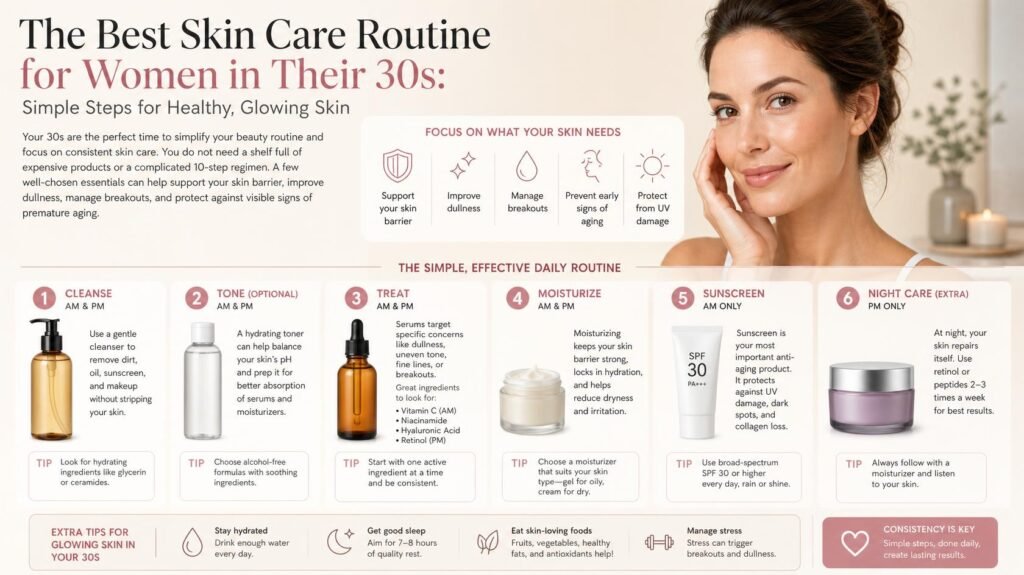
Your 30s are the perfect time to simplify your beauty routine and focus on consistent skin care. You do not need a shelf full of expensive products or a complicated 10-step regimen. A few well-chosen essentials can help support your skin barrier, improve dullness, manage breakouts, and protect against visible signs of premature aging.
The best skin care 30s women routine should be realistic enough to follow every day. Whether your skin is oily, dry, combination, sensitive, or prone to hyperpigmentation, the order stays fairly simple: cleanse, treat, moisturize, and protect.
How Skin Often Changes in Your 30s
Skin does not suddenly become “old” when you turn 30, but it may begin to behave differently. Many women notice that their skin is less naturally hydrated, takes longer to recover from breakouts, or appears dull after stressful weeks and poor sleep.
Common concerns in your 30s include:
- Fine lines around the eyes and forehead
- Uneven skin tone or hyperpigmentation
- Adult acne and clogged pores
- Dryness or increased sensitivity
- Dull or rough texture
- Dehydration
- Sun spots
- Loss of firmness over time
Lifestyle also plays a major role. Sun exposure, smoking, stress, hormonal changes, pollution, and inconsistent sleep can all influence how your skin looks and feels.
The goal of a skin care 30s skincare routine is not to erase every line. It is to maintain a strong skin barrier, prevent unnecessary damage, and use targeted ingredients that address your personal concerns.
The Essential Morning Skin Care Routine
A good morning routine protects your skin from environmental stress and creates a smooth base for makeup. Keep the steps consistent rather than layering too many products.
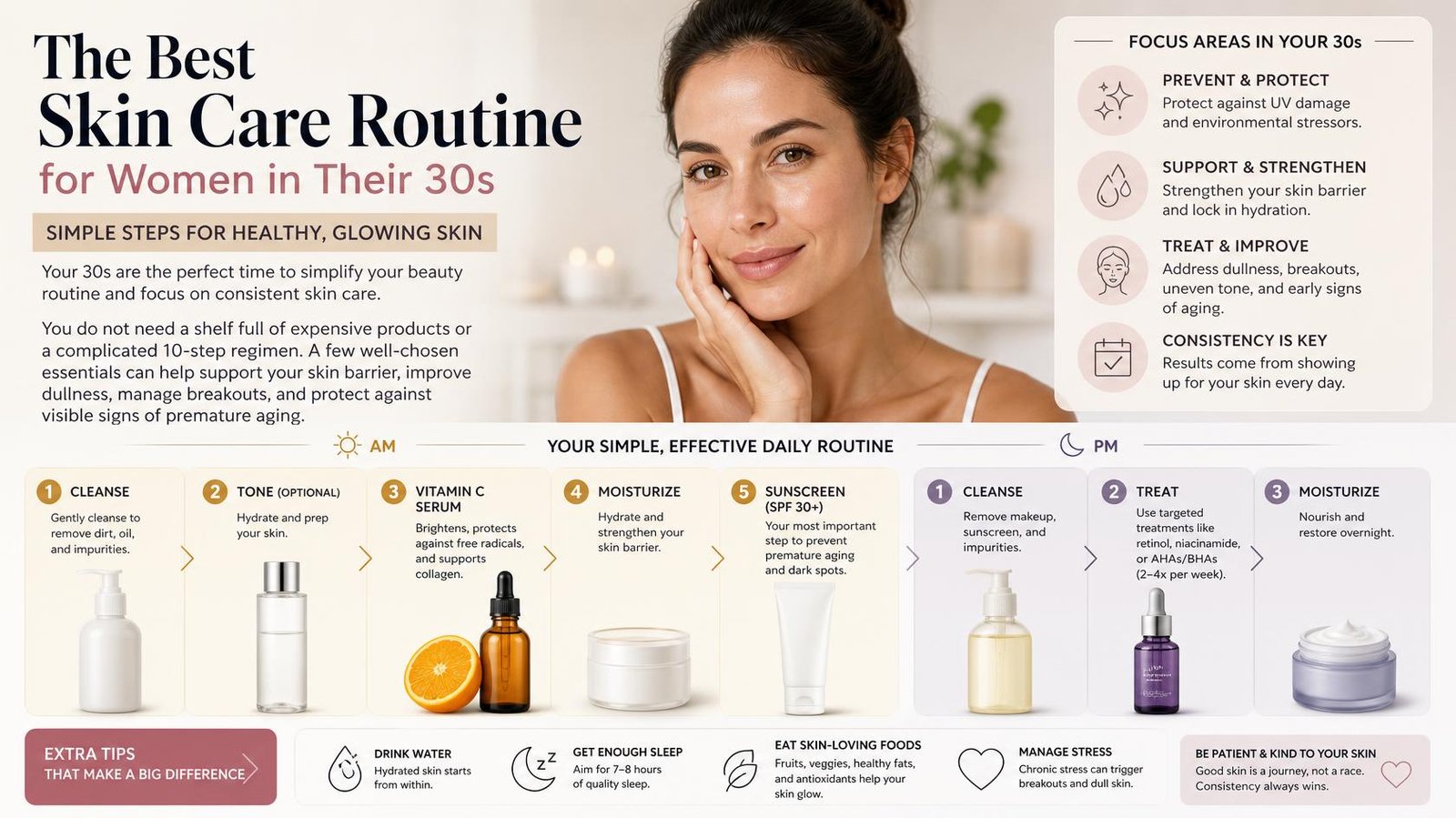
Step 1: Gentle Cleanser
Start with a gentle cleanser to remove sweat, excess oil, and overnight products. If your skin is dry or sensitive, choose a creamy or lotion-based cleanser. If you have oily or combination skin, a low-foam gel cleanser may feel more comfortable.
Avoid cleansers that leave your skin tight, squeaky, or uncomfortable. That sensation can be a sign that the product is stripping too much moisture from your skin.
Step 2: Hydrating Toner or Essence
Toner is optional, but a hydrating formula can be useful if your skin feels tight or dehydrated. Look for ingredients such as glycerin, panthenol, aloe, or hyaluronic acid.
You do not need an astringent toner unless a dermatologist recommends one. Alcohol-heavy products can irritate the skin, particularly if you are already using exfoliants or retinoids.
Step 3: Antioxidant Serum
A vitamin C serum is a popular morning treatment for women in their 30s. It can help support a brighter, more even-looking complexion and complement daily sunscreen use.
Begin with a gentle formula if you are new to active ingredients. Apply a few drops to clean, dry skin, then follow with moisturizer. If vitamin C causes burning, redness, or persistent irritation, stop using it and choose a simpler hydrating serum.
Other useful morning ingredients include:
- Niacinamide for excess oil and uneven tone
- Azelaic acid for blemishes and redness
- Peptides for a supportive, hydrating formula
- Hyaluronic acid for added moisture
You do not need to use all of these together. Choose one treatment based on your main skin concern.
Step 4: Moisturizer
Moisturizer helps support the skin barrier and reduces moisture loss throughout the day. A lightweight lotion or gel cream may suit oily skin, while dry skin often benefits from a richer cream containing ceramides, squalane, or shea butter.
Even oily skin needs hydration. Skipping moisturizer can leave the skin feeling unbalanced and may increase the temptation to overuse harsh products.
Step 5: Broad-Spectrum Sunscreen
Sunscreen is the most important step in any skin care routine for your 30s. Use a broad-spectrum SPF 30 or higher every morning, even on cloudy days or when you plan to stay indoors near windows.
Apply enough to cover your face, ears, neck, and other exposed areas. Reapply when spending extended time outside, swimming, sweating, or exercising.
Sunscreen can help protect against:
- Sunburn
- Uneven pigmentation
- Premature lines
- Loss of firmness
- Long-term UV damage
If sunscreen pills under makeup, try using less moisturizer, allowing each layer to dry, or switching to a lighter sunscreen texture.
The Best Night Skin Care Routine for Your 30s
Nighttime is when you can focus on cleansing thoroughly and using targeted treatments. You do not need an elaborate routine, but consistency matters.
Step 1: Remove Makeup and Sunscreen
If you wear makeup or water-resistant sunscreen, begin with cleansing balm, cleansing oil, or micellar water. Follow with a gentle cleanser to remove remaining residue.
Avoid rubbing the eye area aggressively. Let the remover sit for a few seconds before gently wiping away mascara or eyeliner.
Step 2: Use a Treatment
Retinoids are among the most researched ingredients for improving the appearance of fine lines, uneven texture, and breakouts. Over-the-counter retinol can be introduced slowly into a skin care night routine.
Start with one or two nights per week:
- Cleanse and dry your skin.
- Apply a pea-sized amount of retinol to the face.
- Avoid the corners of the nose, lips, and eyelids.
- Follow with moisturizer.
As your skin adjusts, you may gradually increase use. Do not apply more product to speed up results. Excessive use can cause dryness, peeling, burning, and irritation.
If you are pregnant, trying to conceive, or breastfeeding, speak with a qualified healthcare professional before using retinoids.
Step 3: Moisturize Generously
Finish with a moisturizer that supports your skin barrier. Look for ceramides, glycerin, cholesterol, fatty acids, or squalane if your skin feels dry or sensitive.
You can use the “moisture sandwich” method if retinol feels irritating: apply a thin layer of moisturizer, use your retinol, then finish with another layer of moisturizer.
Skin Care Ingredients to Consider in Your 30s
The right ingredients depend on your skin rather than your age. Choose one or two active ingredients and give them time to work before adding more.
For Fine Lines and Texture
Consider retinol, retinal, peptides, and daily sunscreen. Retinoids may improve the appearance of fine lines over time, but results require patience and consistent use.
For Dark Spots and Uneven Tone
Vitamin C, niacinamide, azelaic acid, and sunscreen can help create a more even-looking complexion. Avoid picking blemishes, as inflammation can make marks last longer.
For Oily or Combination Skin
Salicylic acid can help reduce clogged pores, while niacinamide may support a more balanced appearance. Use exfoliating products carefully and avoid combining too many strong treatments.
For Dry Skin
Look for hyaluronic acid, glycerin, ceramides, squalane, and nourishing creams. Avoid very hot water and harsh scrubs, which may make dryness worse.
For Sensitive Skin
Keep your routine minimal. Choose fragrance-free products, introduce only one new product at a time, and patch-test when possible.
A Simple Weekly Skin Care Schedule
Your skin does not need a different product every day. A weekly routine can help you use active ingredients without overwhelming your barrier.
Monday: Retinol Night
Use retinol followed by a nourishing moisturizer.
Tuesday: Recovery Night
Cleanse and moisturize only. This gives your skin a break from active ingredients.
Wednesday: Gentle Exfoliation
If your skin tolerates it, use a mild chemical exfoliant such as lactic acid or salicylic acid. Do not exfoliate if your skin is irritated or peeling.
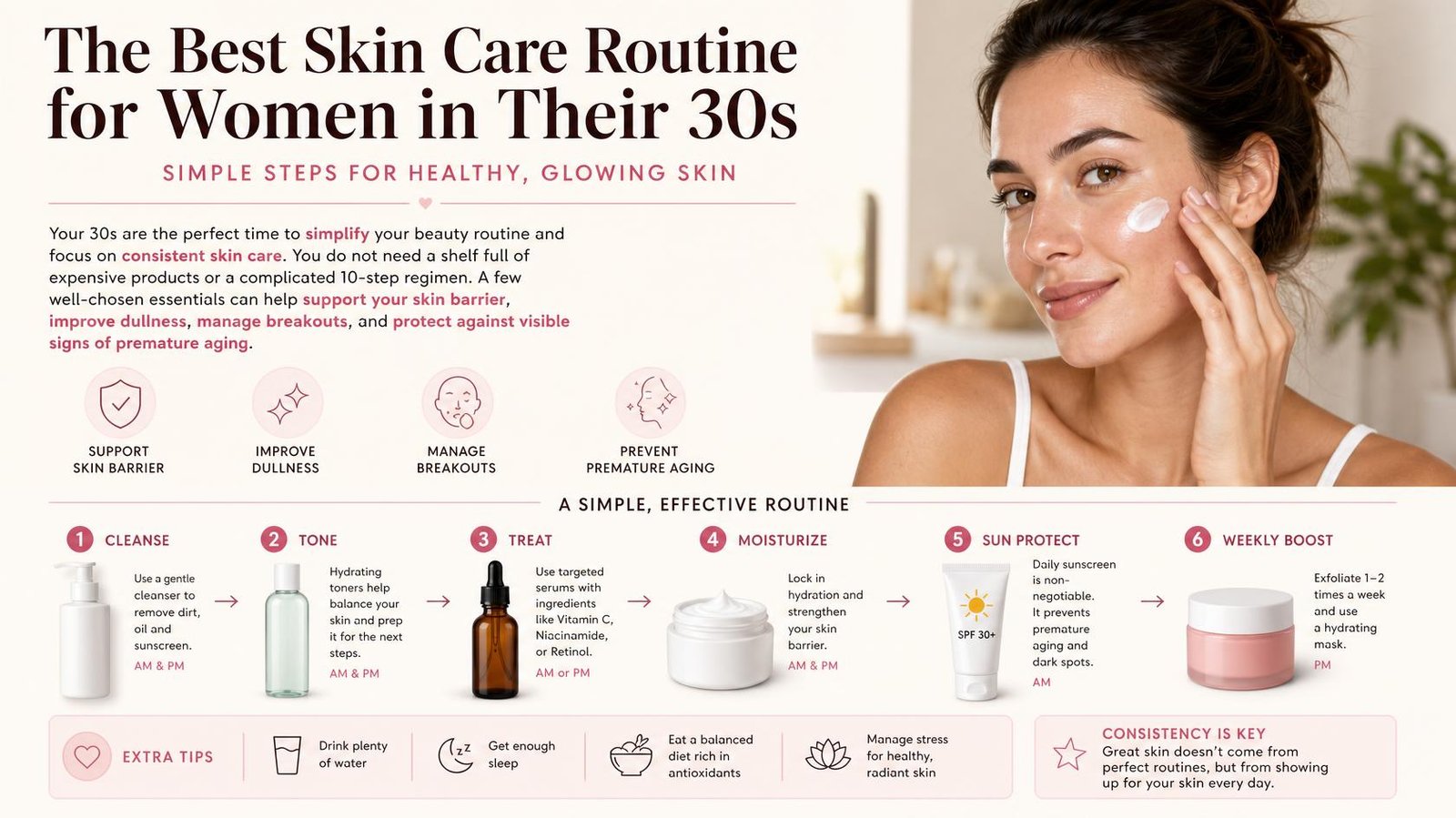
Thursday: Recovery Night
Focus on hydration and barrier support.
Friday: Retinol Night
Repeat your retinol routine if your skin has adjusted well.
Saturday and Sunday: Hydration
Use gentle cleansing, moisturizer, and sunscreen. A hydrating mask can be added if you enjoy it, but it is not essential.
Avoid using retinol and exfoliating acids on the same night when you are beginning. Combining strong active ingredients too quickly is a common cause of irritation.
Common Skin Care Mistakes to Avoid
Even the best products will not perform well if your routine is too aggressive or inconsistent.
Changing Products Too Often
Most skin care products need time before you can evaluate their results. Changing everything every week makes it difficult to identify what is helping or irritating your skin.
Skipping Sunscreen
Using expensive serums without daily sun protection can work against your goals. Make sunscreen the non-negotiable final step of your morning routine.
Over-Exfoliating
Scrubs, exfoliating acids, retinoids, and cleansing brushes can all be irritating when used excessively. If your skin feels raw, hot, tight, or unusually sensitive, simplify your routine.
Picking Breakouts
Picking can increase inflammation and raise the chance of lingering marks. Use hydrocolloid patches or seek professional advice for persistent acne.
Following Trends Without Checking Ingredients
A product can look beautiful online and still not suit your skin. Always check the ingredient list, avoid duplicating strong actives, and be cautious with products that promise instant transformation.
Affordable Skin Care Routine for Your 30s
A helpful routine does not need to be expensive. You can build a basic skin care under budget routine with four products:
- Gentle cleanser
- Moisturizer
- Broad-spectrum sunscreen
- One targeted treatment
Start with these essentials before purchasing toners, masks, facial tools, or multiple serums. Drugstore products can contain effective ingredients, and a simple routine is often easier to maintain.
When shopping, prioritize formulas that suit your skin type instead of choosing products based only on packaging or social media popularity. If a product causes stinging, itching, swelling, or a rash, discontinue use and seek medical advice if symptoms continue.
When to See a Dermatologist
Professional advice is worthwhile if your skin concerns are persistent, painful, or affecting your confidence. A dermatologist can help with acne, rosacea, melasma, unusual pigmentation, severe dryness, and signs of irritation.
Seek medical guidance if you notice:
- A changing or bleeding mole
- Sudden severe acne
- Painful cysts
- Persistent redness or itching
- A rash that does not improve
- Skin changes that appear quickly
Professional treatment can be more effective than repeatedly buying new products and trying to manage a complicated routine alone.
Internal Linking and Trusted Source Suggestions
For a stronger beauty content cluster, add internal links to:
- The Best Skin Care Routine for Oily and Combination Skin
- How to Build a Simple Night Skin Care Routine
- Skin Care Ingredients Guide: What Your Skin Actually Needs
For external authoritative references, consider linking to the American Academy of Dermatology Association for guidance on sunscreen, acne, and retinoid use. The Mayo Clinic is another useful source for general information about skin conditions and when to seek professional care.
Final Thoughts
The best skin care routine for women in their 30s is simple, consistent, and tailored to your skin. Focus on gentle cleansing, daily sunscreen, reliable hydration, and one targeted treatment instead of trying every trending product at once.
Save this guide for your next skin care restock, share it with a friend entering her 30s, and comment with your biggest skin concern: dryness, breakouts, texture, or dark spots?