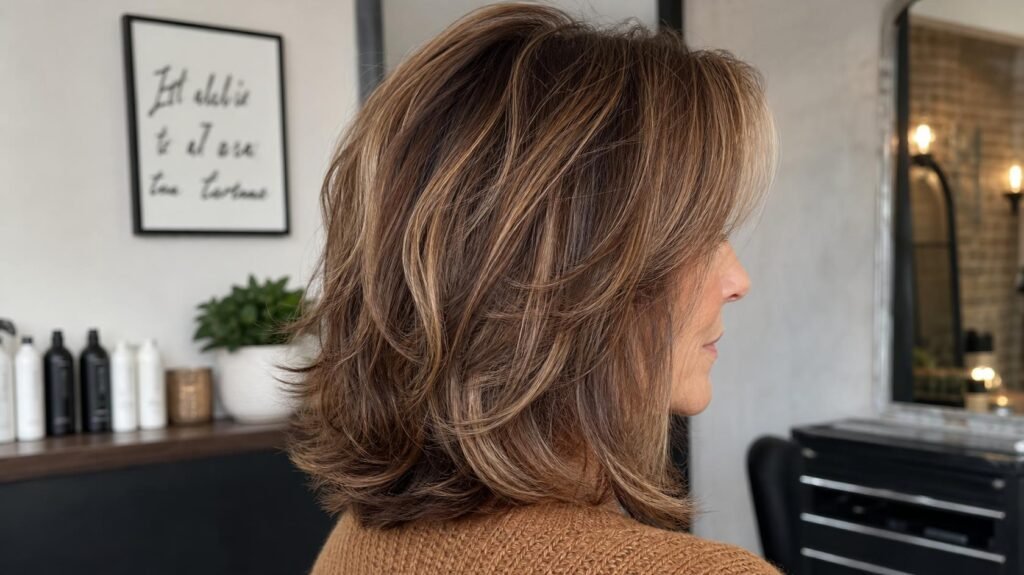
Turning 50 doesn’t come with a haircut rulebook, even though it can sometimes feel that way scrolling through salon inspiration. The truth is, some of the most youthful haircuts for women over 50 right now have nothing to do with “appropriate for your age” and everything to do with texture, movement, and a cut that actually works with the hair you have.
This guide walks through a wide range of flattering cuts from cropped pixies to soft layered lobs organized by hair type and face shape, along with practical guidance on maintenance and how to describe exactly what you want to your stylist.
Quick answer: The most flattering and requested haircuts for women over 50 right now include textured bobs, soft layered lobs, chic pixie cuts, and shags with curtain bangs. These styles tend to add lift at the crown, soften the face, and work well with both natural gray and colored hair, while remaining relatively easy to style day to day.
What Makes a Haircut Look Youthful After 50?
A few consistent themes show up across current haircut recommendations for women over 50:
- Movement over flatness. Layers, texture, and soft waves tend to read as more youthful than a single blunt length with no dimension.
- Lift at the crown. Many flattering cuts are designed to add volume at the root, which counters natural thinning and softens the overall silhouette.
- Face-framing pieces. Shorter layers around the face — whether curtain bangs or angled face-framing sections — draw attention up and soften the jawline.
- A softer approach to length. Shorter and medium lengths (bob, lob, pixie) remain especially popular, since they tend to look polished with less daily styling effort.
- Texture that works with, not against, natural hair. Cuts designed for natural waves, curls, or gray hair’s changing texture, rather than styles that require fighting against it daily.
- Bangs making a comeback. Soft, wispy, or curtain-style bangs are increasingly recommended as an easy way to add a youthful, updated feel to an existing cut.
The Best Haircuts for Women Over 50
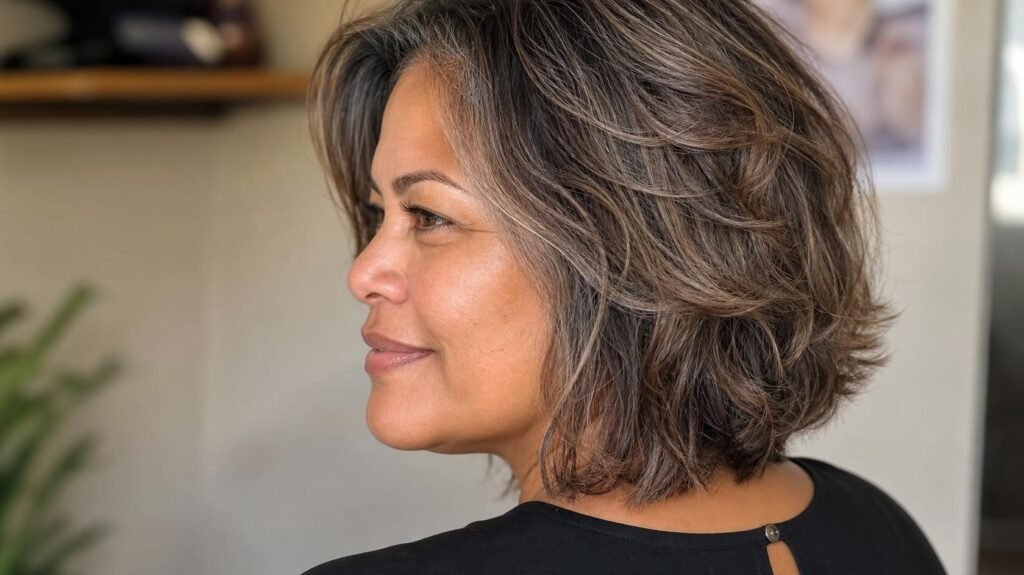
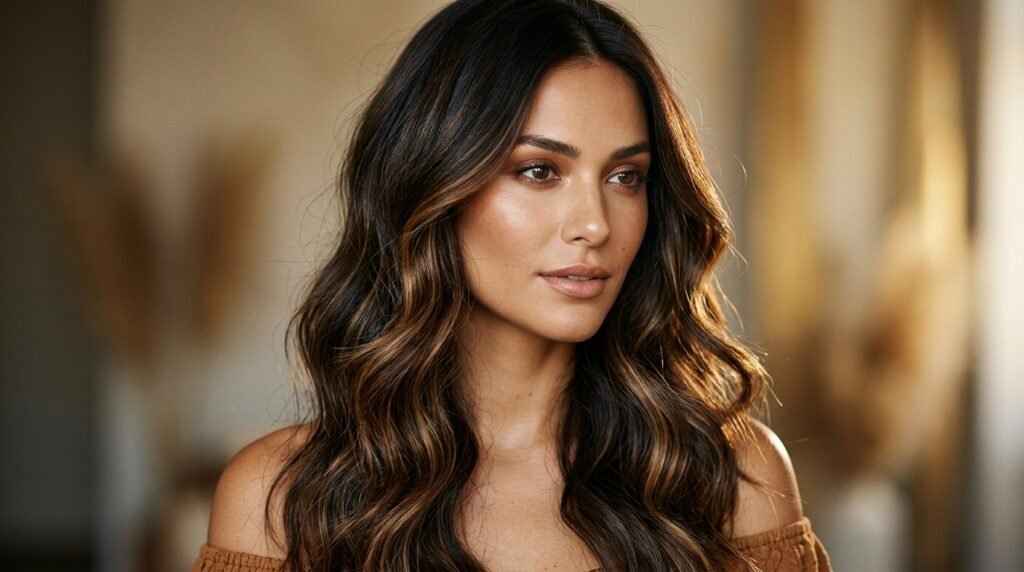
Textured Bob with Soft Waves
A shoulder-length or slightly shorter bob with layered ends styled into loose waves, adding volume and movement throughout. It’s one of the most consistently recommended cuts because it flatters a wide range of face shapes and hair types.
- Who it suits: Fine to medium hair; oval and round face shapes especially.
- Maintenance level: Low to medium.
- Trim frequency: Every 8–10 weeks to maintain shape.
- Say this to your stylist: “I want a textured bob with layered ends I can style into loose waves.”
- Styling tip: A large-barrel curling iron or wand creates the loose wave effect quickly on wash days.
Angled Bob
A bob that’s shorter in the back and gradually longer toward the front, creating a structured, slightly dramatic silhouette. It’s a timeless option that reads as polished and a little more editorial than a straight, even bob.
- Who it suits: Fine to thick hair; oval, heart, and square face shapes.
- Maintenance level: Medium.
- Trim frequency: Every 6–8 weeks to maintain the angle.
- Say this to your stylist: “I want an angled bob — shorter at the back, gradually longer toward the front.”
- Styling tip: Blow-drying with a round brush, pointing the front sections slightly inward, keeps the angled silhouette crisp.
Wavy Lob (Long Bob)
A long bob that hits somewhere between the chin and the shoulders, cut with soft layers and styled with a natural wave. It’s a favorite “in-between” length for women who want some length without a full commitment to long hair.
- Who it suits: Most hair types and face shapes.
- Maintenance level: Low to medium.
- Trim frequency: Every 8–12 weeks.
- Say this to your stylist: “I want a lob with soft layers, styled with natural waves.”
- Styling tip: A texturizing spray on damp hair enhances natural wave patterns without needing a full styling routine.
Chic Pixie Cut
A short, close-cropped cut with textured layers throughout, often featuring a bit of length on top for styling versatility. Consistently recommended as one of the most rejuvenating cuts available, since it highlights the eyes and cheekbones.
- Who it suits: Fine to medium hair; oval and round face shapes benefit especially, though a skilled stylist can adapt it for other shapes.
- Maintenance level: Medium to high, mostly due to trim frequency.
- Trim frequency: Every 4–6 weeks to maintain shape.
- Say this to your stylist: “I want a chic pixie with textured layers and enough length on top to style a few different ways.”
- Styling tip: A small amount of texturizing paste worked through damp hair helps define the shorter layers without weighing them down.
Tousled Pixie with Texture
A slightly longer, more relaxed take on the pixie cut, with choppier, textured layers designed to look effortlessly tousled rather than precisely styled. It’s a great option for those who want a pixie’s ease without a very severe, structured look.
- Who it suits: Fine to medium hair; most face shapes.
- Maintenance level: Medium.
- Trim frequency: Every 5–7 weeks.
- Say this to your stylist: “I want a tousled pixie — choppier layers, more relaxed than a precise, structured cut.”
- Styling tip: Scrunching a light mousse into damp hair before air-drying enhances natural texture for this cut’s signature tousled look.
Shag with Curtain Bangs
A layered, textured cut with face-framing curtain bangs, designed for movement and a slightly retro, effortless feel. It has become one of the most-requested youthful cuts for its built-in volume and soft, face-flattering fringe.
- Who it suits: Medium to thick hair; oval, square, and heart face shapes.
- Maintenance level: Medium.
- Trim frequency: Every 6–8 weeks, with bang trims possibly needed in between.
- Say this to your stylist: “I want a shag with curtain bangs — lots of layers, soft face-framing fringe.”
- Styling tip: Rounding the bangs outward with a small brush while blow-drying keeps the curtain shape soft rather than flat.
Layered Mid-Length Cut
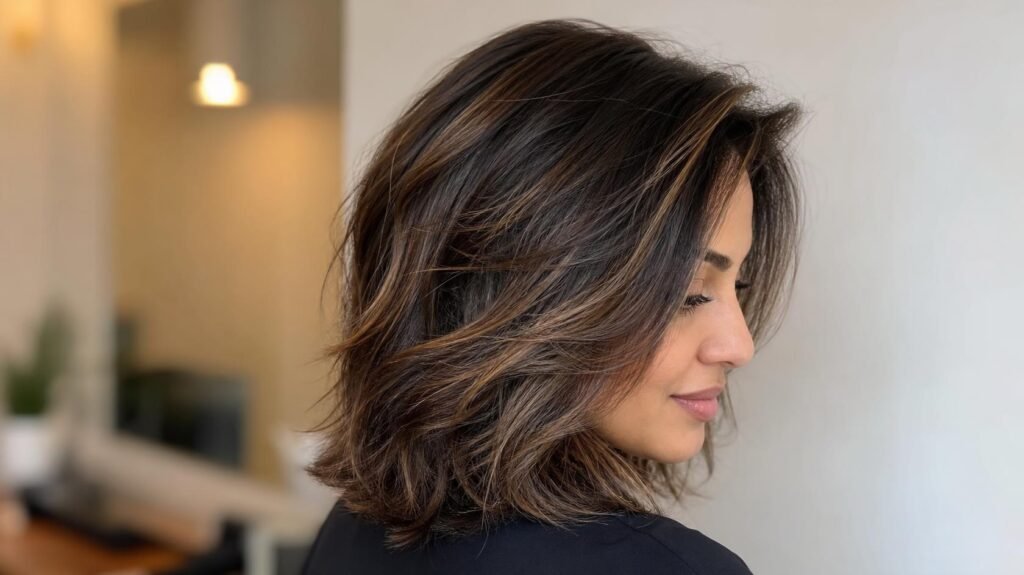
Hair kept at a mid-length (roughly collarbone to just past the shoulders) with layers cut throughout to add movement and prevent the ends from looking heavy. It’s a versatile option for women not ready to go shorter but wanting more dimension than one flat length.
- Who it suits: Fine to thick hair; most face shapes.
- Maintenance level: Low to medium.
- Trim frequency: Every 8–12 weeks.
- Say this to your stylist: “I want to keep my length but add layers throughout so it’s not so heavy.”
- Styling tip: A volumizing mousse applied at the roots before blow-drying helps prevent mid-length hair from looking flat.
Soft Feathered Layers
Long layers cut with a soft, feathered technique that blends gradually rather than in distinct steps, creating gentle movement without heavy layering. It’s a subtler alternative for those wanting dimension without a dramatic layered look.
- Who it suits: Fine to medium hair; oval and long face shapes.
- Maintenance level: Low.
- Trim frequency: Every 10–12 weeks.
- Say this to your stylist: “I want soft, feathered layers — gradual, not choppy or heavily stacked.”
- Styling tip: This cut air-dries especially well, making it a good low-effort option for busy mornings.
Asymmetrical Bob
A bob with one side noticeably longer than the other, offering a modern, slightly edgier take on the classic shape. It draws the eye diagonally across the face, which some stylists suggest can offer a subtly slimming effect.
- Who it suits: Fine to medium hair; round and square face shapes especially.
- Maintenance level: Medium.
- Trim frequency: Every 6–8 weeks to maintain the asymmetry.
- Say this to your stylist: “I want an asymmetrical bob — noticeably longer on one side.”
- Styling tip: A flat iron used to smooth (not necessarily straighten) the ends helps keep the asymmetrical line crisp.
Blunt Bob with Side Part
A clean, one-length bob with minimal layering, worn with a deep side part for a polished, slightly graphic look. It’s a lower-maintenance option for women who prefer sleek, structured hair over a lot of texture.
- Who it suits: Thick to medium hair; oval and heart face shapes.
- Maintenance level: Low.
- Trim frequency: Every 8–10 weeks.
- Say this to your stylist: “I want a clean, blunt bob with minimal layers, worn with a deep side part.”
- Styling tip: A smoothing serum applied to damp hair before blow-drying helps this style achieve its signature sleek finish.
Textured Crop
A very short, cropped cut with heavy texturizing throughout, offering maximum ease and a bold, confident silhouette. It’s one of the lowest-maintenance styling routines on this list, though it requires more frequent trims to maintain its shape.
- Who it suits: Fine to medium hair; oval and heart face shapes especially.
- Maintenance level: High trim frequency, but low daily styling effort.
- Trim frequency: Every 4–5 weeks.
- Say this to your stylist: “I want a very short, textured crop — bold, with minimal daily styling needed.”
- Styling tip: A small amount of matte paste worked through with fingers is often the only styling step this cut needs.
Long Layers with Face-Framing Pieces
Hair kept at a longer length overall, with the main change coming from shorter, face-framing layers around the cheeks and jaw. It’s a popular choice for women who love long hair but want a youthful update without cutting significant length.
- Who it suits: Most hair types; round and square face shapes benefit especially from the framing effect.
- Maintenance level: Low to medium.
- Trim frequency: Every 10–12 weeks, with face-framing pieces checked more often.
- Say this to your stylist: “I want to keep my length, but add face-framing layers around my cheeks and jaw.”
- Styling tip: Curling just the face-framing pieces (rather than the whole head) is a quick way to refresh the look between full styling sessions.
Curly Shag
A layered shag cut specifically tailored to enhance natural curls or waves, using texture and shorter layers to define curl pattern and add volume. It’s an increasingly popular option for women with naturally curly or wavy hair who want a cut that works with, rather than against, their texture.
- Who it suits: Naturally curly or wavy hair of most densities.
- Maintenance level: Low to medium, once the cut is styled correctly for curl type.
- Trim frequency: Every 8–12 weeks.
- Say this to your stylist: “I want a shag cut specifically tailored to enhance my natural curl pattern, not fight it.”
- Styling tip: Look for a stylist experienced in cutting curly hair dry, which allows them to see exactly how each curl falls before cutting.
Graduated (Stacked) Bob
A bob with noticeably shorter layers at the back that gradually lengthen toward the front, creating a rounded, structured silhouette often described as “stacked.” It adds visible volume at the crown and back, which can be especially flattering for finer hair.
- Who it suits: Fine to medium hair; oval and heart face shapes.
- Maintenance level: Medium.
- Trim frequency: Every 6–8 weeks to maintain the stacked shape.
- Say this to your stylist: “I want a graduated, stacked bob — shorter layers at the back, more length toward the front.”
- Styling tip: Blow-drying with your head tipped forward adds extra lift to the stacked layers at the crown.
Grown-Out Pixie (“Pixie-Bob”)
A transitional style between a pixie and a bob, with enough length to tuck behind the ears but still short and textured overall. It’s a popular choice for those growing out a pixie cut or wanting pixie-level ease with slightly more versatility.
- Who it suits: Fine to medium hair; most face shapes.
- Maintenance level: Medium.
- Trim frequency: Every 6–8 weeks to keep the transitional shape neat.
- Say this to your stylist: “I’m growing out my pixie — can we shape it into something polished at this in-between length?”
- Styling tip: A texturizing spray helps this in-between length hold shape and avoid looking flat as it grows.
Jaw-Length Bob with Fringe
A short, jaw-grazing bob paired with a soft, wispy fringe, offering one of the more dramatic length changes on this list alongside a youthful, face-framing bang. It’s a bold but manageable option for those ready for a bigger change.
- Who it suits: Fine to medium hair; oval and heart face shapes.
- Maintenance level: Medium to high.
- Trim frequency: Every 5–7 weeks, with more frequent fringe trims.
- Say this to your stylist: “I want a jaw-length bob with a soft, wispy fringe.”
- Styling tip: Keep a pair of small styling scissors on hand (or visit your stylist) for quick fringe trims between full appointments.
Undercut Pixie
An edgier pixie variation with a shaved or closely cropped undercut at the nape or sides, paired with more length and texture on top. It’s a bolder statement option for women wanting a distinctly modern, confident look.
- Who it suits: Fine to medium hair; most face shapes, especially those wanting a structured, graphic silhouette.
- Maintenance level: High trim frequency for the undercut portion.
- Trim frequency: The undercut may need attention every 3–4 weeks; the top every 5–7 weeks.
- Say this to your stylist: “I want an undercut pixie — a closely cropped section at the nape, more length and texture on top.”
- Styling tip: Because the undercut section is meant to stay short, ask your stylist whether it’s easier to maintain between visits with clippers at home or with more frequent salon trims.
Best Haircuts by Hair Type
For Fine Hair
Fine hair often benefits most from cuts that create the illusion of density: a graduated stacked bob, a textured crop, or a pixie with textured layers all add visible volume without requiring heavy styling. Blunt, one-length cuts can sometimes make fine hair look thinner, so most stylists recommend at least some layering for texture and lift.
For Thick Hair
Thick hair generally has more flexibility, since it holds shape and volume naturally. A blunt bob, shag with curtain bangs, or long layers with face-framing pieces can all work beautifully, since thick hair can carry more length and structure without looking flat.
For Curly or Wavy Hair
Curly and wavy hair tends to look its best in cuts specifically designed around the natural curl pattern, like a curly shag or a layered bob cut dry to account for how curls fall. Avoiding overly blunt, weight-heavy cuts generally helps curls maintain their shape and bounce.
For Gray or Silver Hair
Gray and silver hair often photographs beautifully in textured cuts that catch the light differently at different lengths — a textured bob, pixie, or shag all work well. Regular trims are especially helpful for gray hair, since split ends can appear more visible against lighter strands.
For Thinning Hair
If hair has thinned with age, shorter cuts with strategic layering (a pixie, textured crop, or graduated bob) tend to create the most visible volume, since shorter hair has less weight pulling it flat. A skilled stylist can also recommend specific cutting techniques, like point-cutting, that add texture without removing density where it’s needed most.
Best Haircuts by Face Shape
Face shape is a useful guide when choosing a cut, though personal preference and hair texture matter just as much.
Oval faces are considered the most versatile, generally suiting nearly any cut on this list, from a blunt bob to a textured pixie.
Round faces often benefit from cuts that add height and angles, like an asymmetrical bob, a graduated stacked bob, or long layers with face-framing pieces, which can help elongate the face.
Square faces tend to look especially flattering with softer, layered cuts like a shag with curtain bangs or soft feathered layers, which soften strong jawlines.
Heart-shaped faces (wider at the forehead, narrower at the chin) often pair well with chin-length bobs or side-swept bangs, which balance the proportions of the face.
Long faces frequently benefit from cuts with volume at the sides rather than height at the crown, such as a wavy lob or soft feathered layers, which help create width.
Low-Maintenance Haircuts for Women Over 50
If daily styling time is limited, a few of these cuts are specifically designed for easier upkeep:
- Soft feathered layers air-dry well and require minimal daily styling.
- Blunt bob with side part relies on a clean shape rather than daily curling or texturizing.
- Wavy lob works with natural texture rather than requiring precise styling every day.
- Layered mid-length cut offers movement without a demanding styling routine.
At-home maintenance for these styles generally involves a good leave-in conditioner, a lightweight styling product suited to your hair type, and regular trims to keep shape intact between appointments.
Bold Haircuts for Women Over 50
For those ready for a more dramatic change, an undercut pixie, jaw-length bob with fringe, or textured crop all make a confident statement. These cuts tend to require more frequent trims to maintain their sharper shapes, so they’re best suited to those comfortable with a slightly more involved salon schedule.
How to Choose the Right Haircut Over 50
A few practical factors are worth weighing before your appointment:
- Your natural hair texture (straight, wavy, curly) and how much you want to work with or change it
- Your hair’s current thickness and density
- Your face shape, as a general guide rather than a strict rule
- How much time you realistically want to spend styling day to day
- Whether you’re transitioning to gray, already gray, or coloring your hair
- Your lifestyle, including how often you exercise, swim, or need a quick, no-fuss routine
- How dramatic a change you’re comfortable making in one appointment
If you want a subtle refresh: soft feathered layers, a layered mid-length cut, or added face-framing pieces are all gentle updates to an existing style.
If you want a noticeable but manageable change: a textured bob, wavy lob, or shag with curtain bangs offer real movement and youthfulness without extreme upkeep.
If you’re ready for a bold transformation: a pixie cut, textured crop, or undercut pixie make a confident, distinctly modern statement.
What to Ask Your Stylist
- What cut would work best with my natural hair texture and thickness?
- How much daily styling time will this cut realistically require?
- How often will I need to come in for trims to maintain this shape?
- Can we do a version of this cut that’s a little less dramatic if I want to ease into the change?
- What products would you recommend for styling this cut at home?
- How will this cut grow out, and will it still look intentional between appointments?
- Can you show me a reference photo on hair with a similar texture to mine?
- What’s the best way to add volume if my hair has thinned?
Sample phrases that can help communicate exactly what you want:
- “I want something that adds movement and lift, not just length taken off.”
- “I want a cut that’s easy to style most mornings, nothing too involved.”
- “I like this photo, but can we adapt it slightly for my hair texture?”
- “I want a look that feels current, not like I’m trying to hold onto an old style.”
Hair Care and Styling Tips
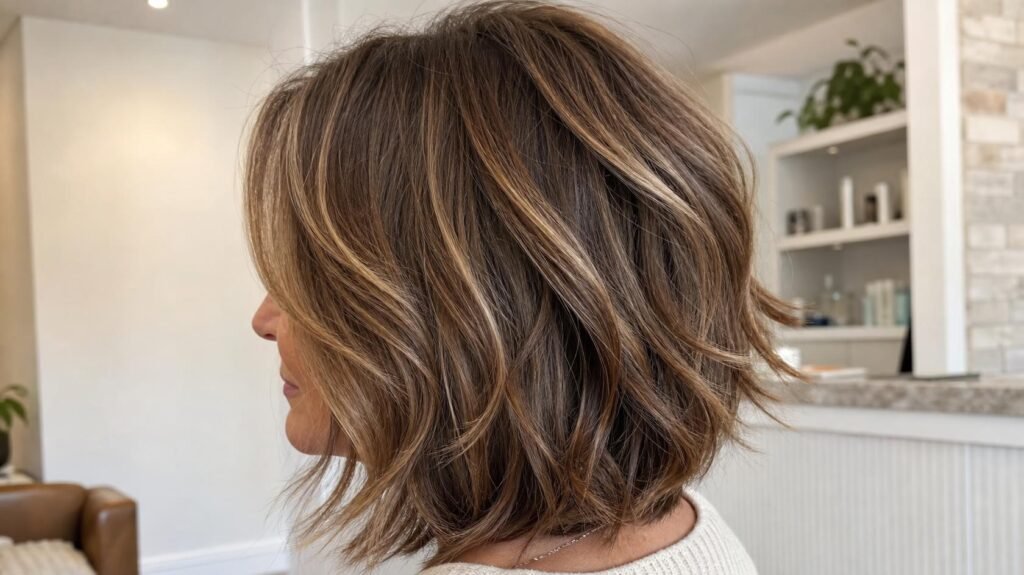
- Schedule regular trims according to your specific cut’s needs, since shape maintenance matters more for shorter, more structured styles.
- Use a volumizing shampoo and conditioner if your goal is added lift and fullness.
- Apply a lightweight leave-in conditioner or heat protectant before any hot tool use to protect hair health.
- Consider a gloss or toning treatment if you color your hair, to keep tone looking fresh between full color appointments.
- Use a wide-tooth comb on wet hair to reduce breakage, especially with textured or curly cuts.
- If hair has thinned, ask your stylist about specific cutting techniques (like point-cutting) that add texture without removing needed density.
- Protect hair from heat damage by using the lowest effective temperature on styling tools.
- Follow your stylist’s specific product recommendations, since they’re tailored to your exact cut and hair type.
How Much Do These Haircuts Cost?
Haircut pricing varies by salon, location, stylist experience, and whether the service includes a wash, style, or add-ons like a gloss treatment, so it’s not possible to give one universal price. Several factors typically affect cost:
- Salon location and reputation
- Stylist experience level
- Whether the service includes a blow-dry or styling finish
- Hair length and thickness, which affect cutting time
- Any add-on treatments, like a deep conditioning or gloss service
- How often you plan to return for trims
Because pricing varies so much, it’s best to check with a local salon directly or ask for a consultation and quote before booking.
Frequently Asked Questions
What is the most flattering haircut for women over 50? There isn’t one universal answer, but textured bobs, layered lobs, and chic pixie cuts are consistently among the most recommended options, since they add movement and can be adapted to most face shapes and hair types.
What haircut makes you look younger after 50? Cuts with movement, layers, and lift at the crown — like a textured bob, shag with curtain bangs, or layered pixie — are generally considered more youthful-looking than one flat, blunt length.
Are short haircuts better for women over 50? Short haircuts are popular for their ease of styling and their tendency to add lift and volume, but longer layered cuts can be just as flattering and youthful depending on hair type and personal preference.
What is the best low-maintenance haircut for women over 50? Soft feathered layers, a blunt bob with a side part, and a wavy lob are among the most low-maintenance options, since they don’t require intensive daily styling.
Is a pixie cut a good choice for women over 50? Yes, pixie cuts are one of the most popular and recommended cuts for women over 50, especially for those with fine to medium hair who want a bold, easy-to-style option.
What haircut is best for fine, thinning hair over 50? Shorter cuts with strategic layering, such as a graduated bob, textured pixie, or textured crop, tend to create the most visible volume for fine or thinning hair.
What haircut suits curly hair over 50? A curly shag or a layered bob cut specifically for curl pattern, ideally by a stylist experienced in cutting curly hair, tends to work best for enhancing natural curls.
How often should I get a haircut after 50? This depends on the specific cut, but shorter, more structured styles like pixies typically need trims every 4–6 weeks, while longer layered cuts can often go 8–12 weeks between appointments.
What haircut works well with gray hair? Textured bobs, pixies, and shags all tend to work well with gray hair, since texture and layering catch the light nicely and help gray hair look intentional and polished.
Do bangs make you look younger over 50? Many stylists suggest that soft, wispy, or curtain-style bangs can add a youthful, updated feel to a haircut, though the right bang style depends on face shape and hair texture.
What face shape suits a bob haircut best? Oval and heart-shaped faces are often considered especially flattering for bob haircuts, though variations like angled or asymmetrical bobs can be adapted for round and square face shapes as well.
Should I go shorter or keep my length after 50? This is entirely a personal choice — both shorter and longer cuts can look youthful and flattering, so the decision should be based on your hair type, lifestyle, and how much styling time you want to spend.
What’s a good transitional cut if I’m not ready to go short? A layered mid-length cut or long layers with face-framing pieces are good transitional options, since they add movement and a fresher look without a dramatic length change.
Can I still have long hair after 50? Yes, long hair can absolutely still look youthful after 50, especially when layered and given face-framing pieces to add movement and prevent the ends from looking heavy or flat.
What haircut is easiest to style for busy mornings? Soft feathered layers, a wavy lob styled to work with natural texture, and a blunt bob with a side part are generally considered some of the quickest, easiest cuts to style on a busy morning.
Final Thoughts
The best haircut for a woman over 50 is simply the one that works with her hair’s natural texture, fits her actual daily routine, and makes her feel like herself — whether that’s a bold pixie, a soft layered lob, or a shag with curtain bangs. Bring a few reference photos to your next salon appointment, be honest with your stylist about how much time you want to spend styling, and don’t be afraid to try something with a bit more movement than you’re used to. A great cut, more than any specific style, is what makes hair look genuinely youthful at any age.
If this guide helped you find a direction you’re excited about, save it for your next salon visit or share it with a friend who’s due for a change — and don’t hesitate to bring a reference photo to your consultation.
D. Haircut Comparison Table
| Cut | Overall Look | Best Hair Type | Maintenance Level | Trim Frequency |
|---|---|---|---|---|
| Textured Bob with Soft Waves | Shoulder-length, wavy, dimensional | Fine to medium | Low–Medium | 8–10 weeks |
| Angled Bob | Shorter back, longer front | Fine to thick | Medium | 6–8 weeks |
| Wavy Lob | Chin-to-shoulder length, natural wave | Most types | Low–Medium | 8–12 weeks |
| Chic Pixie Cut | Short, textured, versatile top | Fine to medium | Medium–High | 4–6 weeks |
| Tousled Pixie with Texture | Relaxed, choppy pixie | Fine to medium | Medium | 5–7 weeks |
| Shag with Curtain Bangs | Layered, face-framing fringe | Medium to thick | Medium | 6–8 weeks |
| Layered Mid-Length Cut | Collarbone-to-shoulder, layered | Fine to thick | Low–Medium | 8–12 weeks |
| Soft Feathered Layers | Long, gently blended layers | Fine to medium | Low | 10–12 weeks |
| Asymmetrical Bob | One side notably longer | Fine to medium | Medium | 6–8 weeks |
| Blunt Bob with Side Part | Clean, sleek, one-length | Thick to medium | Low | 8–10 weeks |
| Textured Crop | Very short, heavily texturized | Fine to medium | High trims, low styling | 4–5 weeks |
| Long Layers, Face-Framing | Long length, shorter face pieces | Most types | Low–Medium | 10–12 weeks |
| Curly Shag | Layered, curl-pattern enhancing | Curly/wavy | Low–Medium | 8–12 weeks |
| Graduated (Stacked) Bob | Rounded, volume at crown/back | Fine to medium | Medium | 6–8 weeks |
| Grown-Out Pixie (“Pixie-Bob”) | Transitional, ear-length | Fine to medium | Medium | 6–8 weeks |
| Jaw-Length Bob with Fringe | Short bob, wispy bangs | Fine to medium | Medium–High | 5–7 weeks |
| Undercut Pixie | Shaved nape/sides, textured top | Fine to medium | High | 3–7 weeks |